Amazfit’s newest rugged flagship, the T-Rex 3 Pro, has landed in India — and it’s clearly aimed at outdoors enthusiasts who want near-professional navigation, long battery life, and premium materials without paying Garmin-Ultra prices. In this deep dive I break down the hardware, tracking and navigation chops, battery life expectations, software and ecosystem, pricing and availability, plus who should (and shouldn’t) buy it.
Amazfit T-Rex 3 Pro Quick spec summary
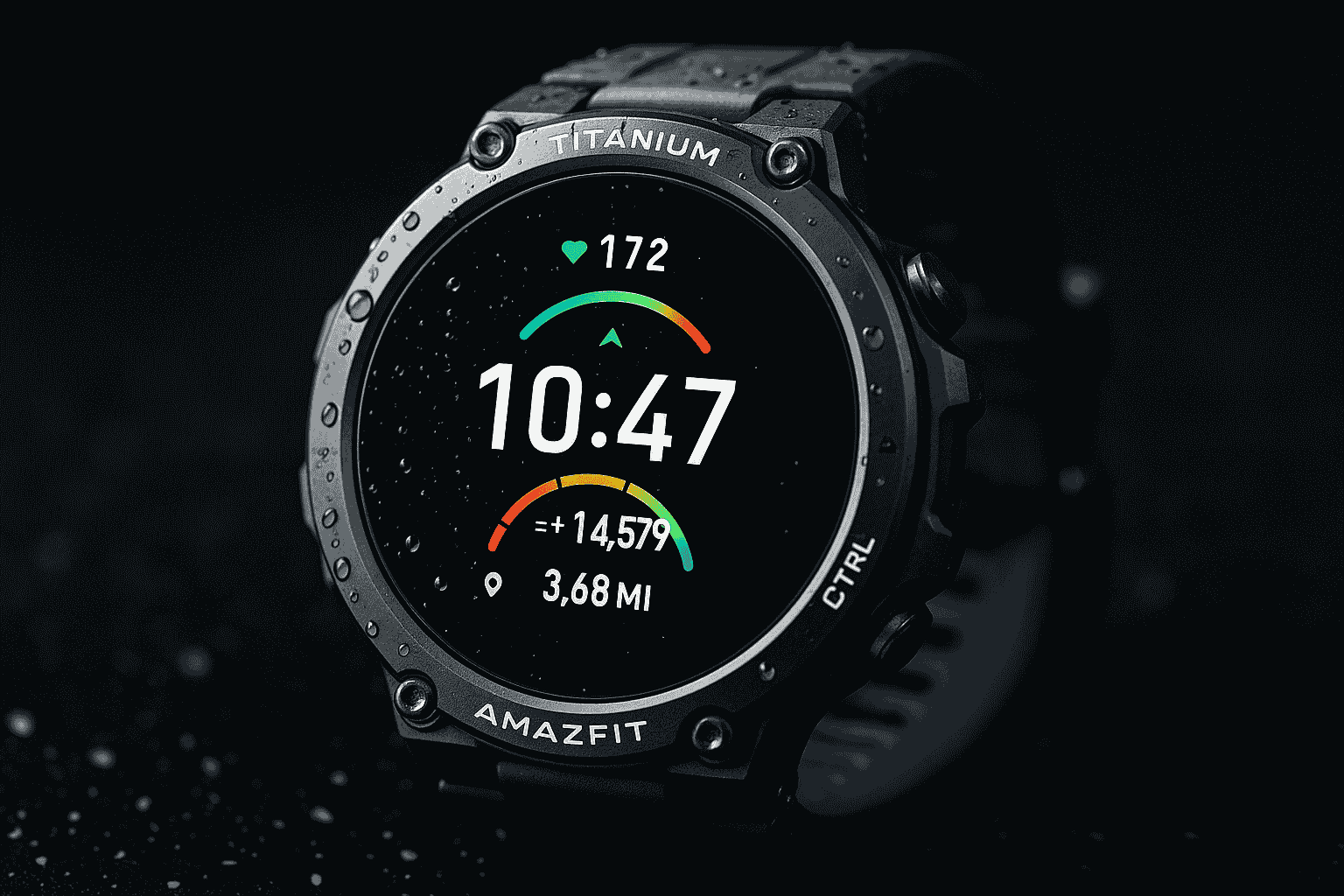
Display: 1.5″ AMOLED, up to 3000 nits, sapphire glass
Materials: Grade-5 titanium bezel + buttons; fiber-reinforced polymer case
Battery: ~25–27 days typical; ~38 hours accurate-GPS mode (varies by usage)
Durability: MIL-STD style toughness, 10 ATM water resistance
Sensors: BioTracker PPG, SpO₂, skin temp, HRV, barometer, compass
Price (India): ₹34,999 (launch)
Amazfit T-Rex 3 Pro First impressions: Design and toughness
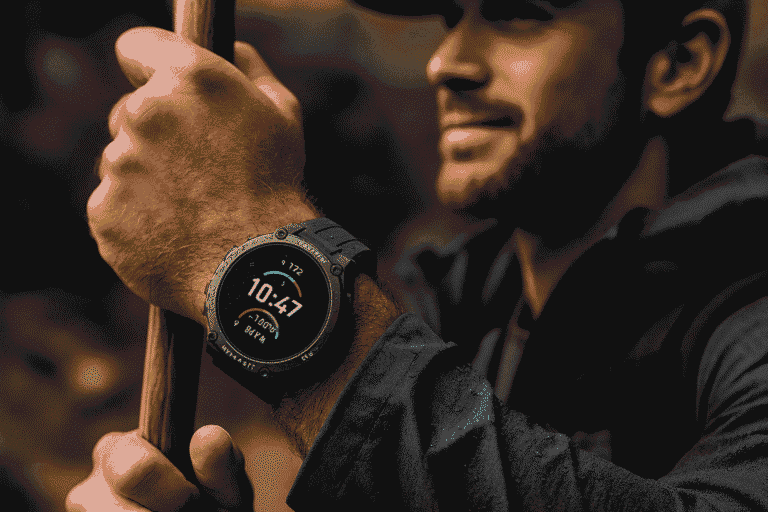
Amazfit has given the T-Rex 3 Pro an upscale makeover compared with many rugged watches in its class.
The 48 mm model sports a 1.5-inch AMOLED display, protected by sapphire glass, and framed by a Grade-5 titanium bezel and buttons — materials choice that both raise durability and lift perceived value. Peak brightness is rated at up to 3,000 nits, so legibility in bright sun is a stated priority, putting it in the same league as premium wearables like the Google Pixel Watch 4.
Design notes worth highlighting: there are two case sizes (48 mm and 44 mm), a chunky but modern look, tactile physical buttons for use with gloves, and a built-in dual-color LED flashlight — handy for campsite tasks or finding gear inside a tent.
These hardware choices clearly position the T-Rex 3 Pro as a true outdoor tool rather than just a sporty fashion accessory.
Amazfit T-Rex 3 Pro First impressions: Design and toughness
Amazfit has given the T-Rex 3 Pro an upscale makeover compared with many rugged watches in its class.
The 48 mm model sports a 1.5-inch AMOLED display, protected by sapphire glass, and framed by a Grade-5 titanium bezel and buttons — materials choice that both raise durability and lift perceived value. Peak brightness is rated at up to 3,000 nits, so legibility in bright sun is a stated priority, similar to the sharp visibility offered by the Samsung Galaxy Watch 8.
Design notes worth highlighting: there are two case sizes (48 mm and 44 mm), a chunky but modern look, tactile physical buttons for use with gloves, and a built-in dual-color LED flashlight — handy for campsite tasks or finding gear inside a tent.
These hardware choices clearly position the T-Rex 3 Pro as a true outdoor tool rather than just a sporty fashion accessory.
Amazfit T-Rex 3 Pro Navigation & sensors
A central selling point of the Pro model is its advanced positioning and navigation stack. Amazfit equips the watch with multi-band satellite support, more robust GPS performance modes, and offline maps with turn-by-turn navigation.
On the biometric front, the T-Rex 3 Pro adds the company’s BioTracker PPG sensor suite for continuous heart-rate, SpO₂, sleep, HRV and skin temperature monitoring.
These sensors are solid for consumer use — good for trend tracking and fitness guidance, though they’ll still trail chest straps and clinical devices for absolute accuracy.
Amazfit T-Rex 3 Pro Battery life
Battery life is a major advantage for the T-Rex family and the Pro keeps that focus. For the 48 mm model Amazfit advertises up to around 25–27 days of typical use on a single charge, with GPS runtime ranging from 38 hours (accurate GPS mode) to much longer in power-saving GPS modes.
That kind of endurance is what makes it attractive for multi-day treks where charging is inconvenient. As always, real-world mileage depends heavily on how frequently you use GPS, Bluetooth calling, and high-brightness display modes.
Software & ecosystem: Zepp app, maps, and smartwatch basics
Amazfit relies on the Zepp app for phone pairing, activity sync, and firmware updates. The app ecosystem has matured: offline maps, route uploading, and third-party watch face options are available, and Zepp doesn’t force a subscription for core functionality.
The watch supports Bluetooth calling (microphone and speaker present), notifications, and the typical array of activity modes (Amazfit advertises 180+ sports modes). Expect a competent — if not radically open — software experience that covers most adventure use cases without needing a phone for every function.
Also read: Samsung Galaxy Watch 8 Classic Review | Brings Back the Old Charm and New Age Skills
Amazfit T-Rex 3 Pro Durability & certifications
Amazfit markets the T-Rex 3 Pro with MIL-STD-810G style military-grade toughness and 10 ATM (100 m) water resistance, plus sapphire glass and titanium elements to resist scratches and corrosion.
It’s also claimed to operate in extreme temperatures (down to -30°C in some regional specs). Those credentials make it suitable for mountaineering, snow sports and diving activities where water resistance and impact protection matter.
Note: “military-grade” is largely a durability marketing standard — it signals a higher tolerance for shock, vibration and temperature but isn’t a single uniform certification.
Amazfit T-Rex 3 Pro Price & availability in India
Amazfit launched the T-Rex 3 Pro in India at ₹34,999 for the 48 mm variant (sold via Amazfit India website, Amazon and select retailers).
Given the materials and feature set, this sits it in a mid-to-upper price band among consumer rugged watches — notably cheaper than many premium Garmins but pricier than entry-level rugged options.
Watch for discounting around sales events which often bring aggressive pricing on Amazfit devices.
How it compares (briefly) to rivals
Amazfit T-Rex 3 Pro Vs Garmin Instinct / Fenix:
Garmin still leads in advanced training physiology, ecosystem for athletes, and mapping depth. T-Rex 3 Pro narrows the hardware gap (titanium, sapphire, brightness) and offers better value, but Garmin’s training tools and third-party integrations remain stronger.
Amazfit T-Rex 3 Pro Vs Vs Amazfit T-Rex 3:
The Pro adds premium materials, sapphire, a larger brighter AMOLED (on 48 mm), and extra navigation hardware — basically a step up for users who want more toughness and screen quality.
Who should buy the T-Rex 3 Pro?
Buy if you:
Hike, trek, or camp and need long battery life plus offline maps.
Want a rugged watch with premium materials (titanium + sapphire) without Garmin prices.
Prefer a bright AMOLED screen for daylight readability and an all-day wearable that still looks premium.
Skip if you:
Are a serious endurance athlete or coach needing Garmin’s advanced training metrics and ecosystem.
Want the absolute best sensor accuracy for clinical metrics (medical-grade devices are different class).
Final verdict
The Amazfit T-Rex 3 Pro is an impressive step for Amazfit: it blends true rugged credentials (grade-5 titanium, sapphire, MIL style toughness) with modern conveniences (1.5″ AMOLED, offline maps, multi-band GPS and long battery life) at a price that undercuts many premium alternatives.
For weekend warriors, adventure travellers, and outdoorsy types who want a durable, capable smartwatch without the premium Garmin tax, it’s a compelling proposition. If top-tier athlete features or pro-grade mapping/third-party integrations are essential, look at higher-end Garmins — but for most users the T-Rex 3 Pro hits an excellent value-to-feature balance.