For students in 2026, a laptop is an indispensable tool, serving roles from note-taking and research to project development and entertainment.
Navigating the market to find a capable machine within a budget of ₹50,000 can be challenging, as many options compromise on key specifications. This guide focuses on identifying a single, standout recommendation that balances performance, durability, and value for the demanding academic environment.
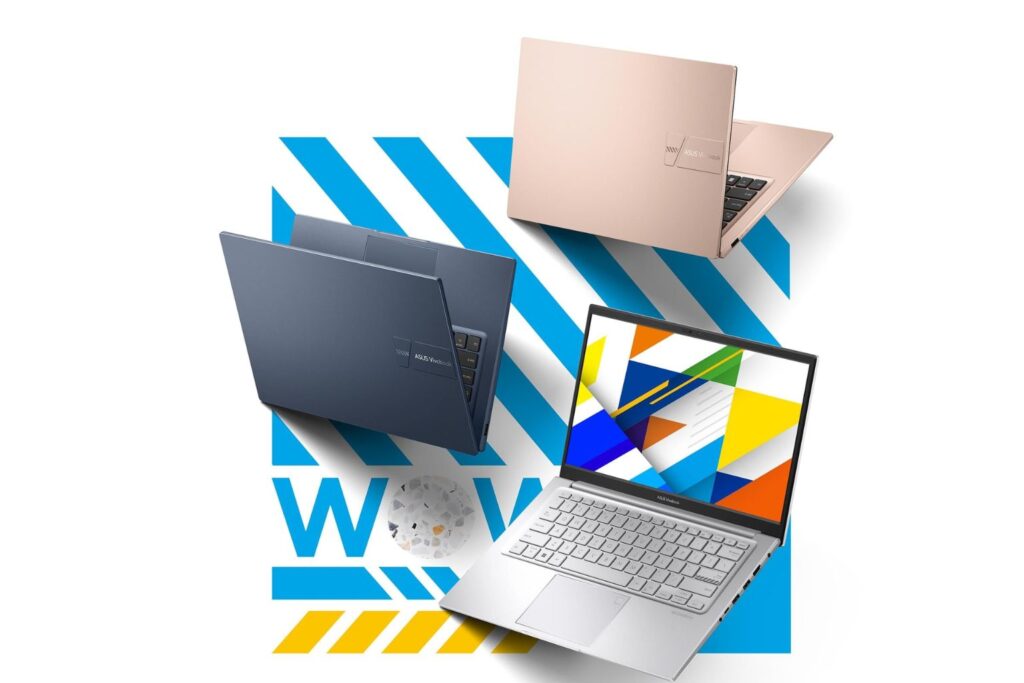
After reviewing current market offerings, assessing component capabilities, and considering typical student usage patterns, the ASUS Vivobook 14 (Model X1404VA) emerges as the premier choice in this price bracket.
ASUS Vivobook 14 (X1404VA): The Top Recommendation
The ASUS Vivobook 14 (X1404VA) distinguishes itself by offering a robust feature set typically found in higher-priced segments. Its configuration addresses the core needs of a student, ensuring reliable performance across various academic tasks.
Key Specifications at a Glance:
Processor: Intel Core i5-1335U (13th Gen, 10 Cores, 12 Threads)
RAM: 16GB DDR4 (Expandable in some configurations)
Storage: 512GB PCIe Gen3 NVMe SSD
Display: 14-inch Full HD (1920 x 1080) IPS, Anti-Glare
Battery: 42WHr, 3-Cell Li-ion
Weight: Approximately 1.4 kg (3.09 lbs)
Operating System: Windows 11 Home
Price (Approximate): ₹48,000 – ₹49,500
Performance for Academic Demands
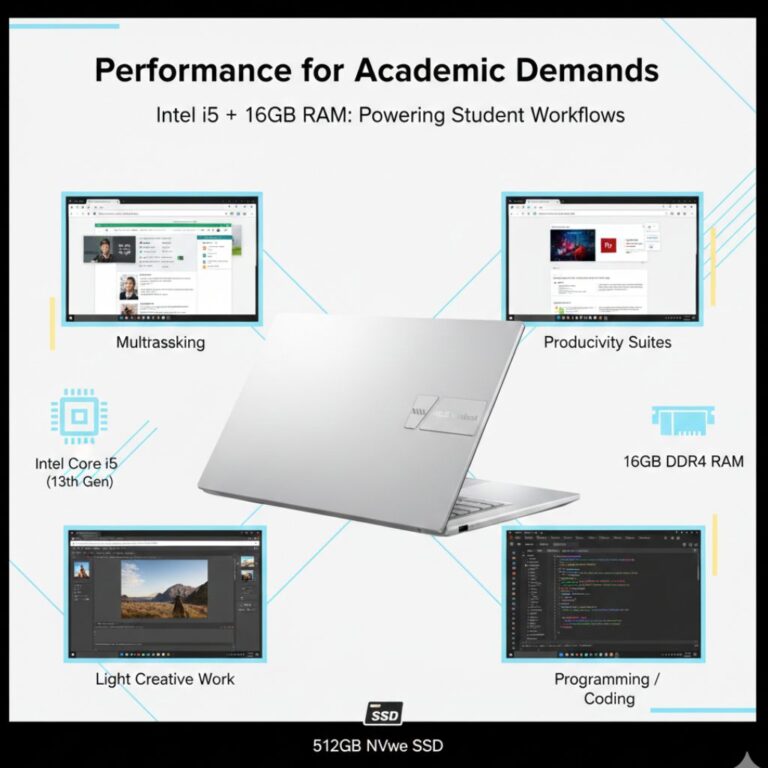
The inclusion of an Intel Core i5-1335U processor is a significant advantage. This 13th generation chip features an efficient hybrid architecture with Performance-cores and Efficient-cores, providing ample power for:
Multitasking: Running multiple applications simultaneously, such as a web browser with numerous tabs, a word processor, and a PDF reader, without noticeable slowdown.
Productivity Suites: Smooth operation of Microsoft Office (Word, Excel, PowerPoint) and other office productivity software.
Light Creative Work: Handling basic photo editing or video rendering tasks for presentations and projects.
Programming/Coding: Compiling code and running development environments efficiently for computer science students.
The 16GB of DDR4 RAM is crucial for future-proofing and handling demanding applications. Many laptops in this price range still offer only 8GB, which can become a bottleneck as software evolves and students require more open applications.
The 512GB NVMe SSD ensures rapid boot times, quick application loading, and swift file transfers, enhancing the overall user experience compared to traditional hard drives.
Display and Ergonomics
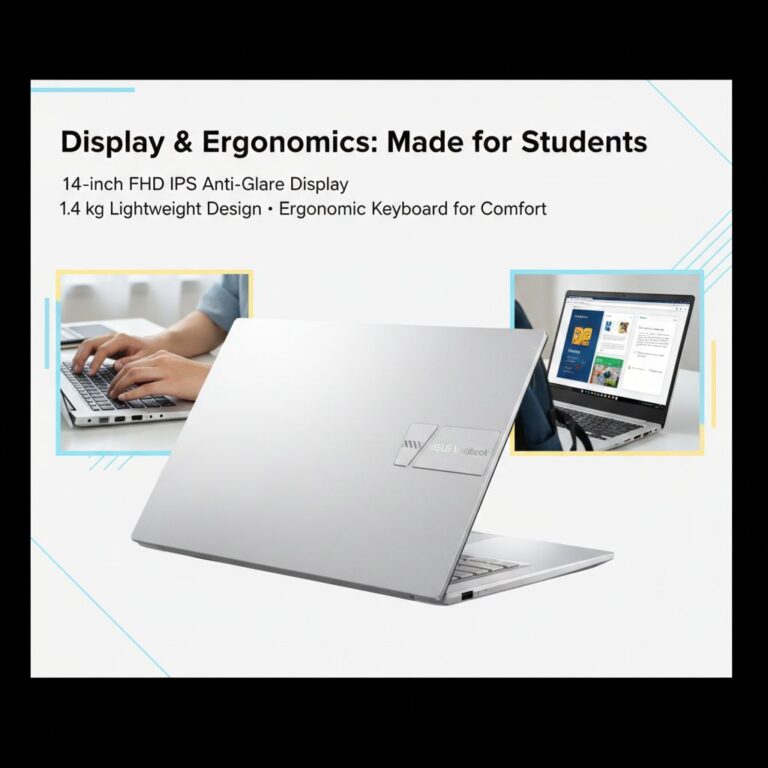
The 14-inch Full HD IPS anti-glare display provides clear visuals with good color reproduction, suitable for reading textbooks, watching lectures, and working on documents for extended periods.
The anti-glare coating is particularly beneficial in various lighting conditions, such as brightly lit classrooms or outdoor study spots, reducing eye strain.
Weighing approximately 1.4 kg, the Vivobook 14 is highly portable. Its compact form factor makes it easy to carry in a backpack, a critical consideration for students who commute between home, campus, and libraries.
The keyboard offers a comfortable typing experience with good key travel, essential for long study sessions and essay writing.
Value for Money
At an approximate price point of ₹48,000-₹49,500, the ASUS Vivobook 14 (X1404VA) delivers a strong performance-to-price ratio.
Its combination of a current-generation i5 processor, generous RAM, and fast SSD storage provides a compelling package that outpaces many competitors within the sub-₹50,000 segment.
Conclusion
For students seeking a single, reliable laptop recommendation under ₹50,000 in 2026, the ASUS Vivobook 14 (X1404VA) stands out.
It provides the necessary computational power, memory, storage speed, and portability to handle the diverse requirements of academic life without exceeding budget constraints. Its balanced specifications ensure that students are equipped with a tool that supports their studies effectively from their first day to graduation.