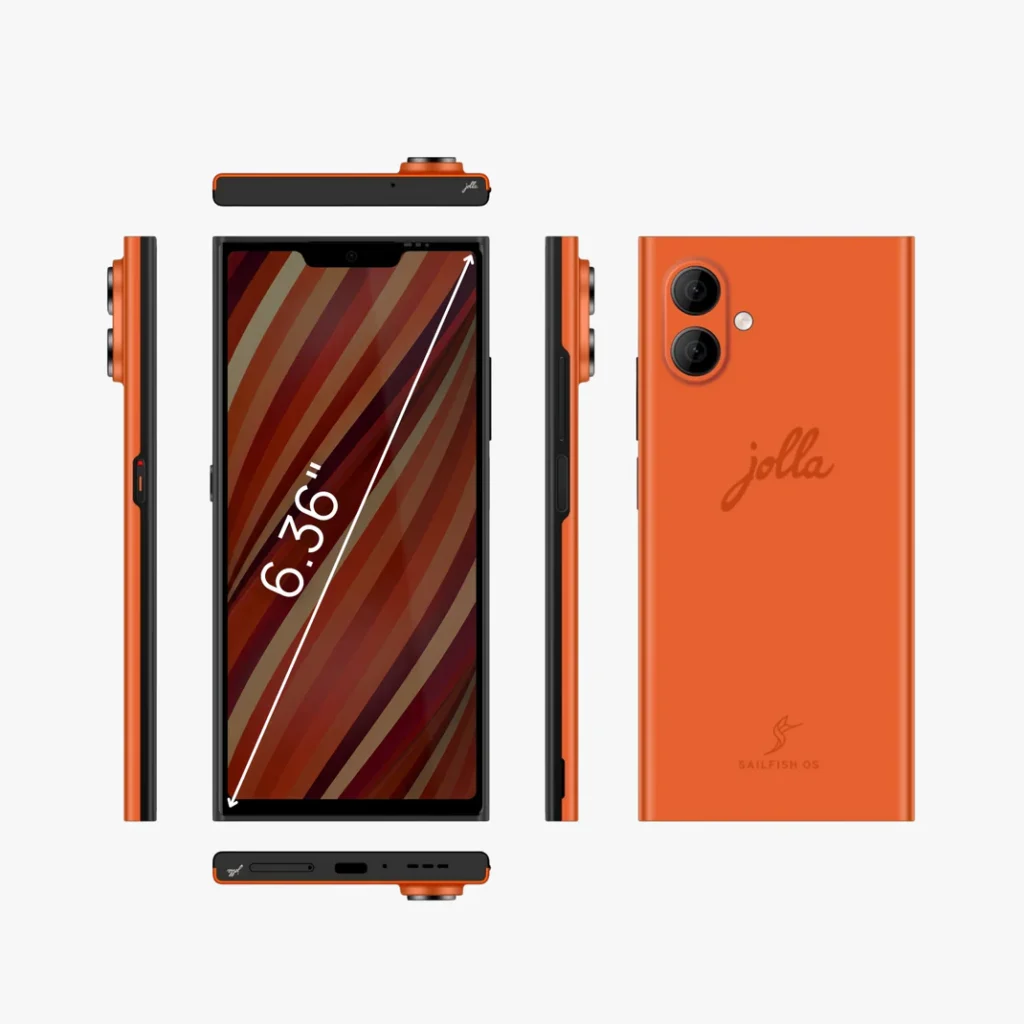
For more than a decade, Apple’s iOS and Google’s Android have dominated the global smartphone market, shaping an ecosystem where data collection is routine and digital sovereignty outside the U.S. and China is limited. As Europe pushes back through regulation and rising privacy concerns, a homegrown alternative is returning. Jolla’s newly announced, Jolla Phone powered by its privacy-focused Sailfish OS, represents more than another device launch it signals Europe’s growing push to challenge the mobile duopoly and assert control over its digital future.
Key Specifications – Jolla Phone
| Operating System | Sailfish OS (Linux-based) |
|---|---|
| Display | 6.0-inch Full HD, 90Hz |
| Processor | Octa-core with 5G support |
| Memory | 8GB RAM, 256GB storage |
| Battery | Replaceable, all-day usage |
| Privacy | No Google services by default |
Breaking the Mobile Duopoly in Europe
Europe is reshaping its relationship with big tech by taking a global lead in digital regulation and challenging the dominance of major US technology platforms. This shift is driven by laws such as the Digital Markets Act, which aims to open closed ecosystems and promote fair competition, alongside strong enforcement actions like hefty fines against Apple. Similar efforts in the UK, where regulators are moving against entrenched mobile platform power, show a growing determination across Europe to curb gatekeeper control and reduce dependence on walled digital ecosystems.
Europe’s push for digital sovereignty is growing as reliance on foreign operating systems is seen as a strategic risk. Jolla’s Sailfish OS, with over a decade in the market, emerges as a rare European alternative, and the new Jolla Phone turns this goal into reality by offering a privacy-focused, user-controlled device built on European values.
How Sailfish OS Solves the App Problem
Sailfish OS 5 sits at the core of the Jolla Phone, offering a Linux-based alternative built on a decade of development and a fundamentally different philosophy from mainstream platforms. Its defining promise is strict user privacy, with no trackers, background data collection, or Google services, setting it apart from the data-driven ecosystems of Google and, to a large extent, Apple.
ChatGPT said:
Jolla avoids the common alternative-platform failure by solving the app ecosystem problem through Sailfish OS’s AppSupport, which lets Android apps run on a Linux-based system. This hybrid model delivers access to popular apps while preserving Sailfish’s privacy and security benefits, with the added option for users to disable Android components entirely. Jolla further sets itself apart by promising at least five years of OS support, reinforcing user control and long-term device longevity.
How Sailfish OS Solves the App Problem
Jolla Sailfish OS vs iOS/Android
| Feature | Description | Contrast with iOS/Android |
|---|---|---|
| Privacy Foundation | No trackers, no background data collection, no Google Play Services. | Telemetry and advertising IDs are standard. |
| Android App Support | Runs Android apps via AppSupport; components can be disabled. | Native-only (iOS) or tightly Google-dependent (Android). |
| Software Longevity | Minimum 5 years of OS support guaranteed. | Roughly 3–5 years for most Android phones; longer on iOS but hardware-tied. |
| Development Model | Community-driven “Do It Together” (DIT). | Closed, proprietary (Apple) or Google-led (Android). |
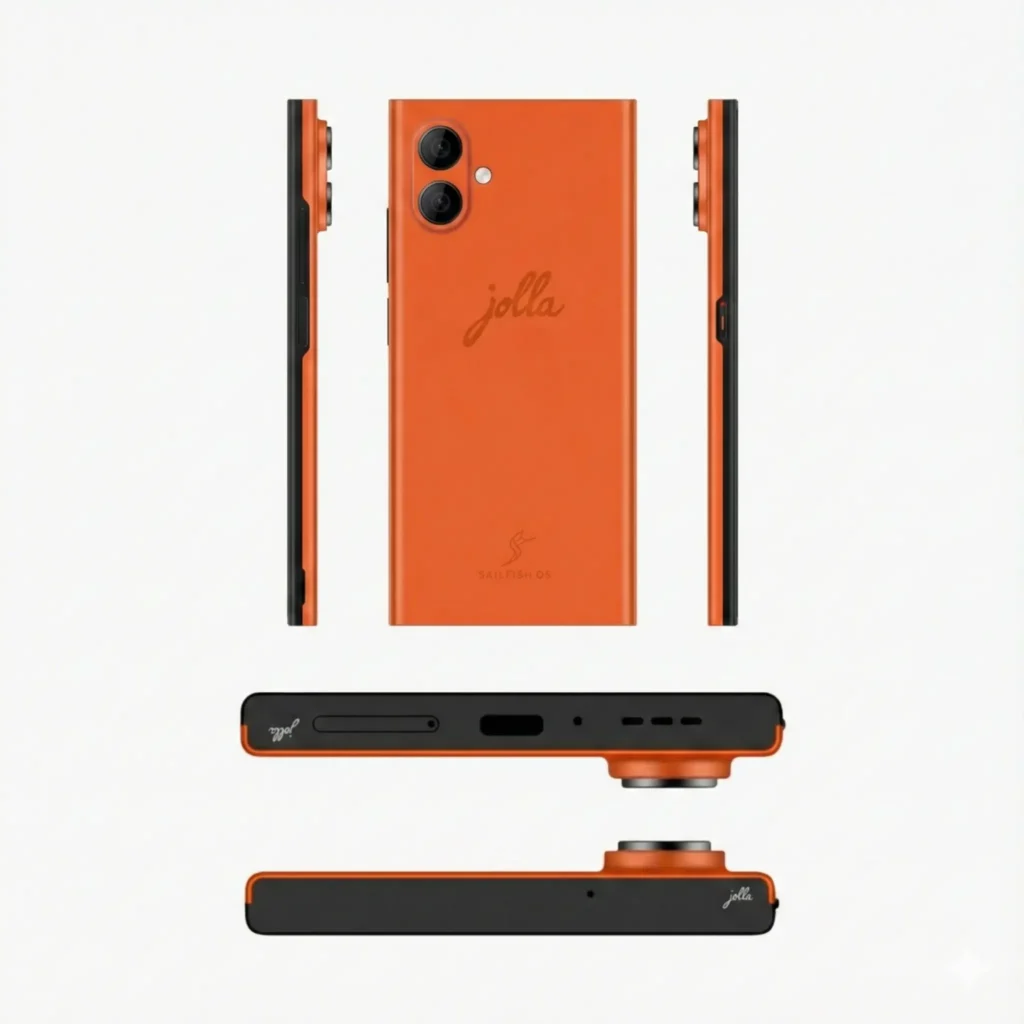
The hardware design emphasises user control and sustainability, rejecting sealed, disposable smartphone trends. With features like a replaceable battery and a physical privacy switch that disables sensors at the hardware level, the Jolla Phone offers strong, reliable privacy. At the same time, modern specifications ensure it remains a capable, well-rounded device built around autonomy and long-term use.
The Jolla Phone is being launched through a community-driven pre-order approach that confirms demand before full production. The company has already exceeded its 2,000-unit pre-order target, with early backers able to buy the device for €499, while the final price is expected to settle between €599 and €699, placing it in the mid-to-high segment as a niche, value-focused product.
Significant hurdles remain, including the need to scale production, build broader brand recognition, and support a healthy app ecosystem. While the company’s long-term support record demonstrates resilience and commitment, competing in the mainstream smartphone market will require a much higher level of execution.