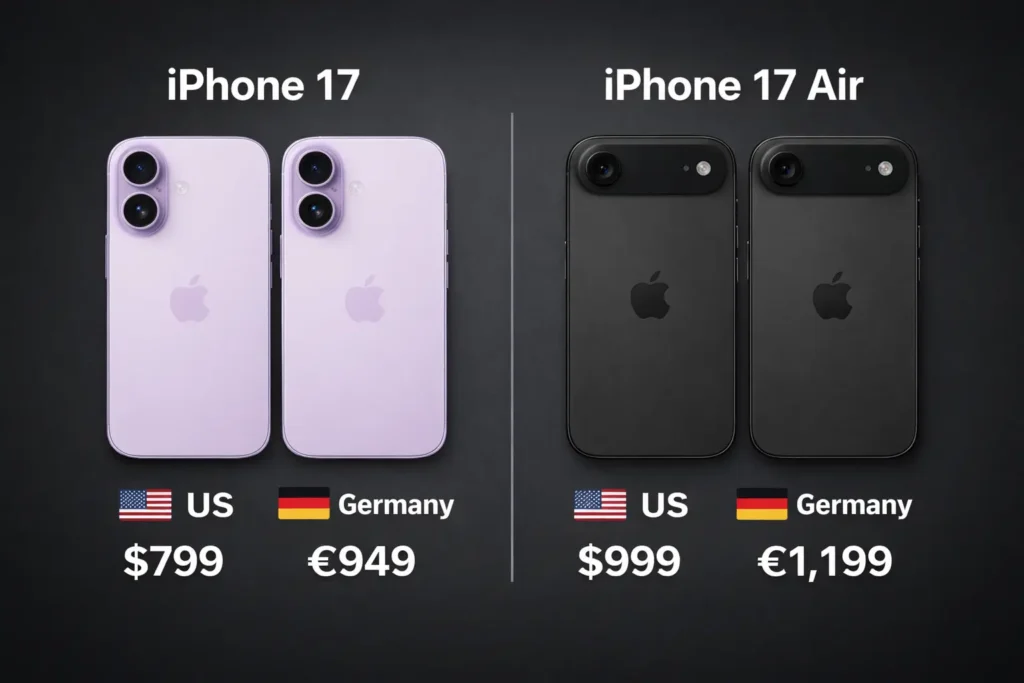
If you checked Apple’s website after the iPhone 17 launch and compared prices across regions, the difference is hard to miss. The iPhone 17 price in the US starts at $799 — but in Germany, the same device is listed at €949. At current exchange rates, that’s roughly $1,023, meaning the iPhone 17 price difference between Germany and the US comes out to around $224 for identical hardware. The iPhone 17 Germany vs US price gap is significant, and the reasons behind it are worth understanding.
So what explains the difference? Is Apple charging Europeans a premium simply because it can? The reality is more nuanced than that.
The Biggest Factor: VAT
The primary driver behind the iPhone 17 price Germany gap is Value Added Tax, or VAT. Germany applies a 19% VAT rate on consumer goods, and unlike the US — where sales tax is added at the point of purchase and varies by state — European retail prices always include tax upfront. The €949 you see on Apple’s German website already has that government tax built in.
When you strip out the 19% VAT from the German price, the pre-tax figure comes out to roughly €797 — nearly identical to the $799 US price. In terms of Apple iPhone 17 pricing, the company is applying a broadly consistent base price across both markets. The tax structure is what creates most of the visible gap.
How Exchange Rates Widen the Gap
Currency fluctuations also contribute to the iPhone price Europe vs US difference. Apple sets regional prices periodically rather than adjusting them in real time. When the euro weakens against the dollar — which has happened repeatedly in recent years — the euro-denominated price doesn’t automatically update. Apple typically holds prices steady for a full product cycle, meaning exchange rate movements can make the iPhone 17 global pricing gap appear larger depending on when you’re doing the comparison.
This dynamic was particularly noticeable with the iPhone 17 Air, which is priced at $999 in the US and €1,199 in Germany, a gap that becomes more pronounced on higher-end models.
The US Price Doesn't Tell the Full Story
It’s worth noting that the $799 iPhone 17 price US figure doesn’t include sales tax. Depending on the state, American buyers could pay between $799 and approximately $870 or more at checkout.
In high-tax states like California, local rates can exceed 10% in some counties. While this doesn’t close the gap entirely, it does mean the real-world difference is often smaller than the headline figures suggest. Germany’s 19% VAT still exceeds most US state tax rates, so European buyers generally do pay more in total.
A Hardware Note for European Buyers
There’s one additional distinction worth flagging for buyers considering why iPhone 17 costs more in Germany relative to what they’re getting. The US version of the iPhone 17 is eSIM-only, which freed up internal space for a larger battery, roughly 9% more capacity than models sold in markets that still require a physical SIM card slot, including Germany.
European buyers are paying a higher price while receiving a slightly smaller battery, a trade-off driven by regional regulatory and carrier requirements rather than Apple’s pricing decisions.
The Bottom Line on iPhone 17 VAT Germany and Global Pricing
The iPhone 17 price difference between Germany and the US is mostly a function of tax policy, not Apple charging a regional premium. Adjust for VAT and the pre-tax prices align closely. Currency volatility and Apple’s infrequent repricing cycles can amplify the gap at certain points in the year, but the core explanation is straightforward: governments, not Apple, account for most of the price difference European consumers see at checkout.
For German buyers seeking a lower effective price, markets such as Japan and Hong Kong have historically offered iPhone pricing closer to US levels — though warranty coverage and SIM compatibility are practical factors to consider before purchasing abroad.