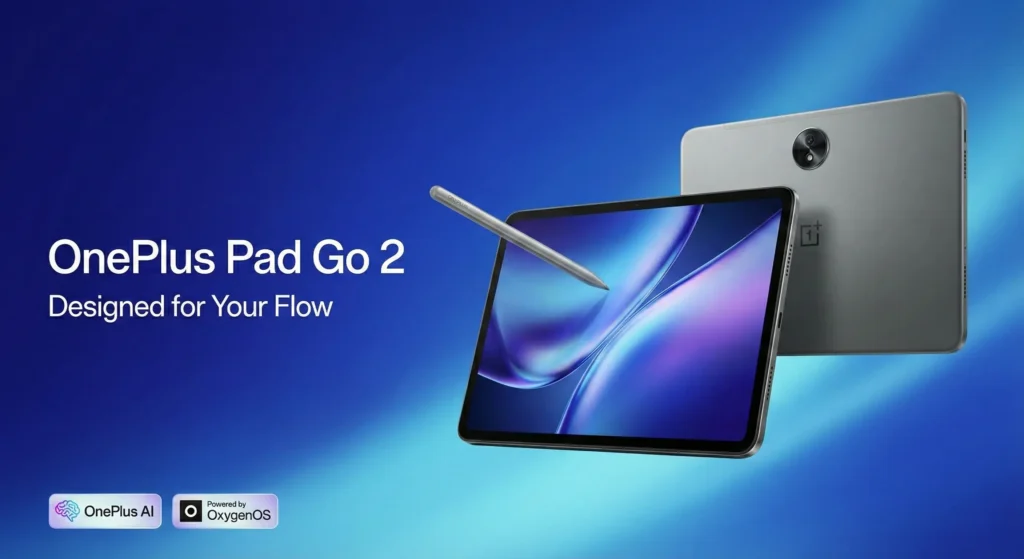
The upcoming OnePlus tablet is rapidly developing, with leaks and official hints suggesting it will feature a 12.1-inch 2.8K display, MediaTek’s Dimensity 7300 chip, and at least one 5G variant. OnePlus is expected to confirm the full specs at its next event.
What the leaks and benchmarks show
A suspected OnePlus Pad Go 2 has appeared on Geekbench with a Dimensity 7300 chip and 8GB of RAM, delivering typical mid-range benchmark scores. The results match recent hands-on leaks, confirming that the Pad Go 2 is targeting solid value rather than flagship-level performance.
Reports suggest the Pad Go 2 will ship with Android 16 under OnePlus’s custom skin, framing it as a modern, software-focused mid-range tablet. The leaked benchmarks offer only an early indication of performance, which will ultimately depend on OnePlus’s thermal and software tuning.
Display, features and connectivity
Leaks suggest it will feature a 12.1-inch 2.8K LCD display with Dolby Vision, around 900 nits of peak brightness, and wide color coverage a significant upgrade for its class. The Pad Go 2 is also expected to support a stylus and OnePlus multitasking tools, making it ideal for media use and light productivity.
Leaks suggest the Pad Go 2 will come in both Wi-Fi and 5G variants, with the 5G model (OPD2504) expected to be limited to a single premium configuration. This mirrors common OEM strategy: offer a higher-margin “pro-connectivity” option while keeping the main lineup affordable.
Launch timing, variants and what to expect
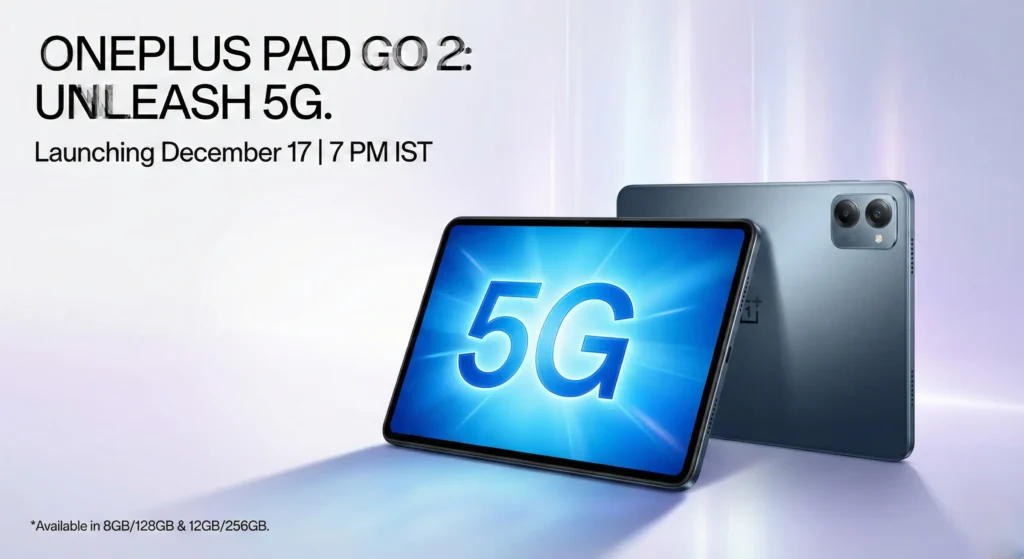
OnePlus will showcase the Pad Go 2 and 15R at an event in Bengaluru on December 17th, where specs, pricing, and availability will be finalized. Early leaks suggest that the Wi-Fi and 5G variants will come in colors like Lavender Drift and Shadow Black, with 5G likely included in Shadow Black. Ultimately, pricing and battery/charging details will be key considerations for buyers.
Leaks suggest the Pad Go 2 will come in both Wi-Fi and 5G variants, with the 5G model (OPD2504) expected to be limited to a single premium configuration. This mirrors common OEM strategy: offer a higher-margin “pro-connectivity” option while keeping the main lineup affordable.