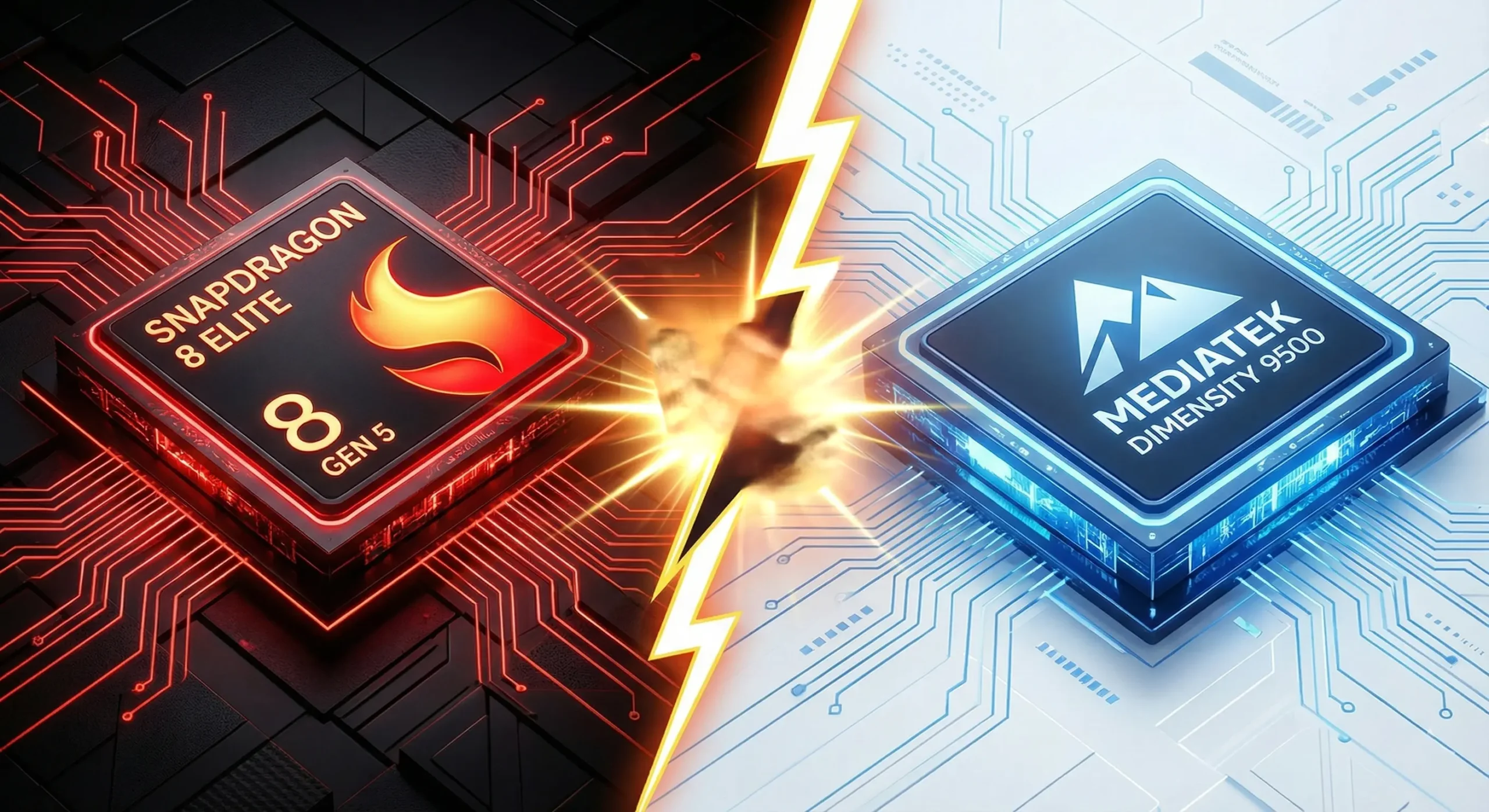
Snapdragon 8 Elite Gen 5 and Dimensity 9500 are 2025 flagship SoCs built for top-tier performance, AI, and gaming. Qualcomm uses Oryon CPUs and Adreno graphics, while MediaTek relies on ARM C1 cores and Mali-G1 Ultra. Each leads in different areas: Snapdragon in GPU strength, Dimensity in CPU efficiency.
Both SoCs use advanced 3nm manufacturing and 8-core designs focused on high single-thread speed and efficient multitasking. Snapdragon 8 Elite Gen 5 relies on Qualcomm’s 3rd-gen Oryon CPU on TSMC 3nm, while Dimensity 9500 uses ARM C1 cores on its own 3nm process. This shared node enables high clocks with solid power efficiency.
CPU Architecture & Performance Breakdown
Snapdragon 8 Elite Gen 5 uses Qualcomm’s 3rd-gen Oryon setup with two high-clocked prime cores, while Dimensity 9500 uses ARM’s C1 architecture focused on high IPC. Early benchmarks suggest Dimensity slightly leads in single-core performance, whereas Snapdragon tends to pull ahead in multi-core and sustained workloads due to tuning and thermal advantages.
| Metric | Snapdragon 8 Elite Gen 5 | Dimensity 9500 |
|---|---|---|
| Process node | TSMC 3nm (vendor-tuned) | 3nm-class node |
| CPU focus | High single & sustained multi-core clocks | Aggressive single-core IPC / efficiency |
| GPU | Adreno (Gen-800 family) | Mali-G1 Ultra |
Talking about the GPU, the Snapdragon 8 Elite Gen 5 uses the Adreno 840 with higher clocks and advanced memory/frame engines, while the Dimensity 9500 relies on the Mali-G1 Ultra MP12. Adreno generally leads in ray tracing and compute performance, whereas Mali shows strength in fill-rate and shader-heavy tests. Actual gaming FPS varies based on drivers and device thermals.
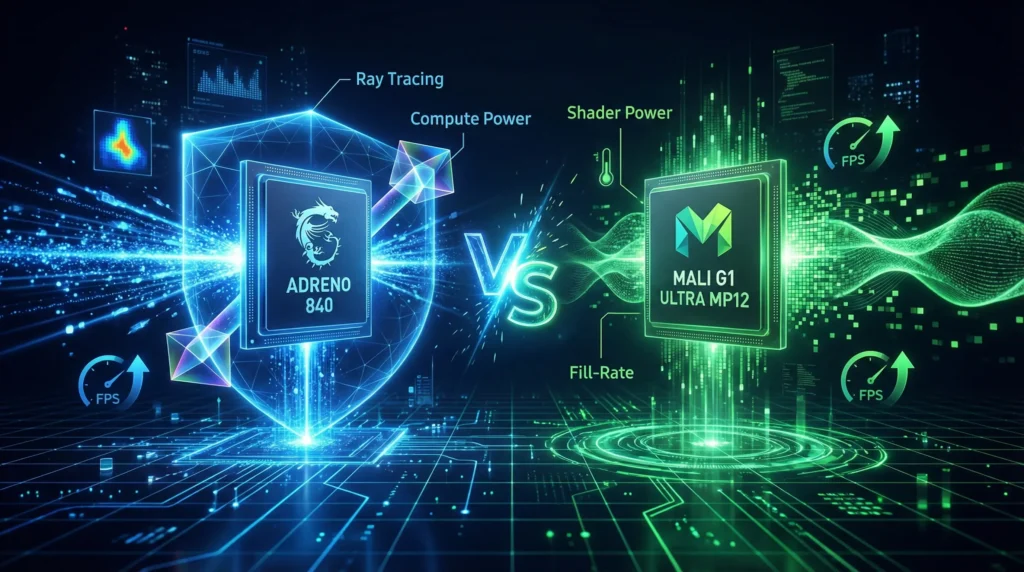
Talking about the GPU, the Snapdragon 8 Elite Gen 5 uses the Adreno 840 with higher clocks and advanced memory/frame engines, while the Dimensity 9500 relies on the Mali-G1 Ultra MP12. Adreno generally leads in ray tracing and compute performance, whereas Mali shows strength in fill-rate and shader-heavy tests. Actual gaming FPS varies based on drivers and device thermals.
Qualcomm’s flagship modem and ISP setup gives the Elite Gen 5 an edge in 5G speeds, mmWave, and RF features. MediaTek’s 9500 offers solid 5G and ISP performance too, but Qualcomm still holds the stronger overall modem ecosystem.
Both SoCs are more efficient than before. Dimensity 9500 excels in single-core efficiency, while Snapdragon sustains higher clocks in phones with strong cooling. Long-session performance mainly depends on the device’s thermal design.

Real-world benchmarks show both chips performing extremely close overall. Dimensity 9500 often takes a slight lead in single-core tests, while Snapdragon 8 Elite Gen 5 pulls ahead in multi-core and GPU-heavy workloads. With only a 3–6% difference between them, the phone’s thermals and tuning matter more than the chip itself.
Device availability is solid for both chips: Snapdragon 8 Elite Gen 5 is already in major flagships, while Dimensity 9500 is rolling out in high-end phones focused on value. Overall experience depends more on software updates and OEM tuning than the chipset brand.
Snapdragon 8 Elite Gen 5 is the better choice if you want the full flagship package with strong Adreno GPU performance, top-tier modem features and Qualcomm-led AI integrations, as long as the phone has good thermals. Dimensity 9500 offers excellent single-thread speed, powerful multimedia performance and strong value. Both chips are top-tier, so the real decision depends on the device’s cooling, software support and price.