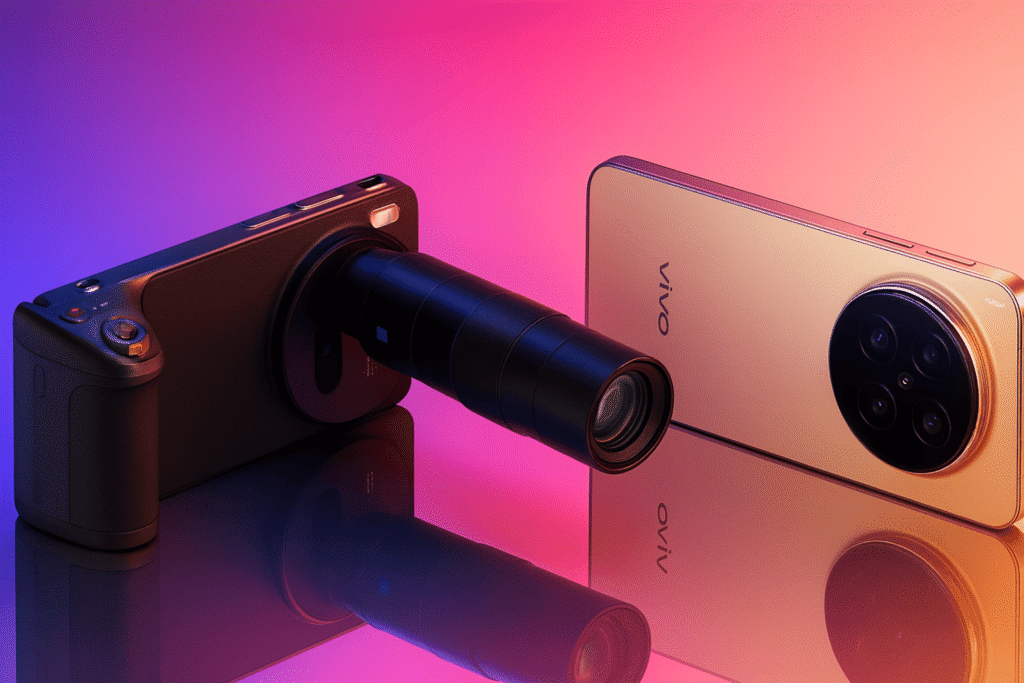
The vivo X300’s biggest camera upgrade isn’t obvious on a spec sheet. A single internal change reshapes how the phone shoots at night, zooms at a distance, and competes with top camera flagships and most people won’t notice it at first glance.
The vivo X300’s camera shift isn’t about headline specs but a smart reallocation of sensors: the regular X300 keeps a 200MP main camera, while the Pro uses a stabilized 50MP Sony sensor as its primary and moves the 200MP sensor to the periscope telephoto prioritising steadier, more practical zoom and low-light photography over pure megapixel bragging.
On the Pro, a stabilized 50MP Sony main sensor delivers steadier, cleaner low-light and motion shots through OIS and vivo’s image processing, while a 200MP telephoto boosts zoom detail with less digital loss. Together, this creates two camera approaches: one focused on raw main-camera resolution, the other on stable everyday photos and sharper practical zoom.
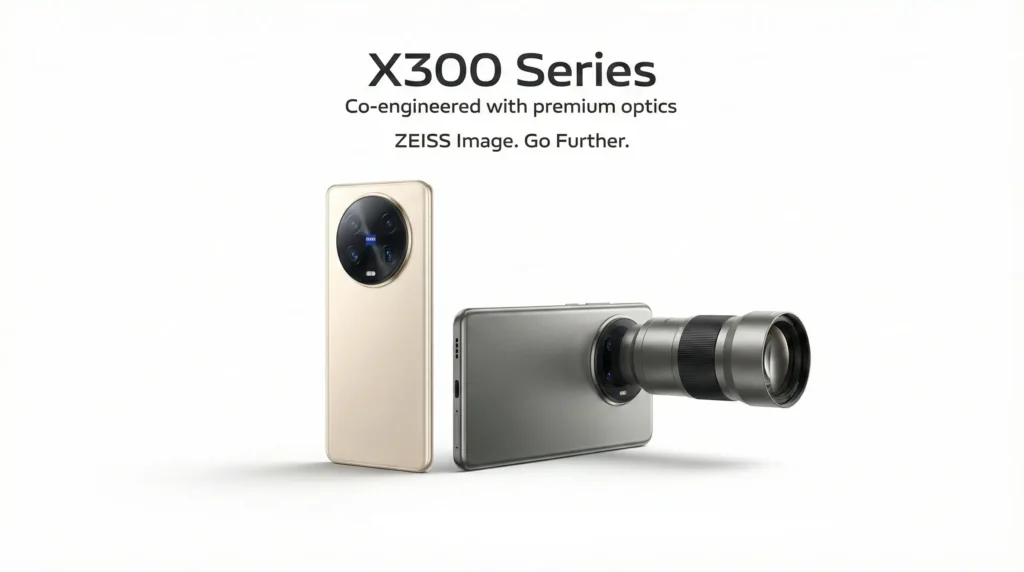
Both X300 models follow a flagship formula: AMOLED displays with HDR tuning and strong outdoor visibility, premium glass-and-metal builds, and solid water/dust protection. The Pro gets a larger 6.78-inch LTPO panel with adaptive 1–120Hz refresh, while the standard X300 is more compact but similar in quality, with both offering the heft and durability of true flagships.
vivo X300 Specifications
vivo X300 vs X300 Pro
1.5K · 120Hz
1.5K · 120Hz
Wide Sensor
Gimbal OIS
Periscope
Periscope
Performance, Power, and Pricing: Where the vivo X300 Series Draws Its Real Lines
The phones run on the Dimensity 9500 chip with custom imaging enhancements that improve noise control, enable 10-bit video recording, and deliver accurate color profiles. High RAM options and fast UFS 4.1 storage keep performance smooth, making multitasking, editing, and daily use feel quick and responsive.
The X300 series is built for long use, with big batteries and fast charging that handle extended camera sessions. Both phones support 4K video, slow motion, and 10-bit recording, along with Zeiss camera modes, smart flash, and improved colors, while the Pro also gets a better 50MP front camera for clear selfies and vlogs.
Both phones support 4K video, slow motion, and 10-bit recording, along with Zeiss camera modes, smart flash, and improved color tuning, while the Pro adds a better 50MP front camera for selfies and vlogging. The Pro is priced higher due to its upgraded camera setup and larger battery, making it better for users who shoot a lot of zoom or low-light photos, while the standard model suits those who want high-resolution shots in a slightly lighter phone.