Xiaomi has started the stable, global rollout of HyperOS 3 (built on Android 16), beginning with the 15T series and expanding across phones, tablets and wearables in staged waves. This is the company’s most visible push to move HyperOS beyond beta into wide availability.
HyperOS 3 Global Rollout Starts: Xiaomi 15T & 15T Pro Get First Stable Update
- HyperOS 3 is rolling out in waves worldwide starting late October 2025, with the Xiaomi 15T / 15T Pro among the first to get the stable build.
- The release packs a redesigned UI, new animations and AI-led features, tighter cross-device integration, and Android 16 security and privacy improvements.
- Expect a phased schedule: high-end recent flagships first, then midrange Redmi/Poco lines, tablets, watches and some smart TVs in later batches.
What’s new in HyperOS 3
UI refresh: cleaner icons, smoother system animations, “Liquid Glass” visual motif, and new lock-screen options.
AI & personalization: AI wallpapers, smarter suggestions, and expanded on-device features with a privacy-focused cloud/edge balance.
Cross-device integration: improved sharing, cross-device unlocking, and deeper interaction across phones, tablets, watches, and select smart TVs.
Under the hood: built on Android 16, bringing improved memory management, enhanced privacy controls, and updated security patches.
Xiaomi’s official schedule indicated a soft release window between October and November 2025, with stable builds appearing regionally and expanding by carrier/market. The 15T family was the first confirmed global recipient; subsequent waves now include dozens of models across Xiaomi, Redmi and POCO brands. Because Xiaomi uses staged OTA pushes, arrival dates will vary by country and carrier.
HyperOS 3 Eligible Devices List: Xiaomi, Redmi & Poco Phones Getting the Update
Flagships:
- Xiaomi 15
- Xiaomi 15 Pro
- Xiaomi 15 Ultra
- Xiaomi 15T
- Xiaomi 15T Pro
- Xiaomi 14
- Xiaomi 14 Pro
- Xiaomi 14 Ultra
Upper Midrange / Midrange:
- Redmi K70
- Redmi K80
- Redmi Note 14 series
- Redmi Note 15 series
- Poco F7
- Poco X7
Tablets & Wearables:
- Xiaomi Pad 7 lineup
- Xiaomi Pad 6S Pro
- Xiaomi Watch S4
- Select Redmi and Poco tablets and smartwatches
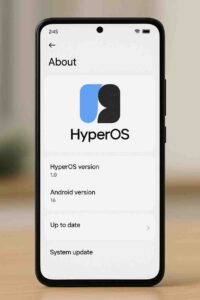
For a device-level check, consult Xiaomi’s official HyperOS release page and your phone’s Settings → About → System update. Staged rollouts mean eligibility doesn’t guarantee immediate availability.
HyperOS 3 Update: Backup, Storage & Key Steps Before You Install
- Backup: full cloud or local backup before major OS upgrades.
- Check: Settings → About phone → System update. If no OTA, Xiaomi typically publishes a rollout schedule and region list.
- Space & battery: major upgrades can need several GB of free storage and 50%+ battery (or plug in).
- Rollback & support: if you hit issues, note Xiaomi’s official channels and carrier guidance don’t install unofficial packages unless you know what you’re doing.
How HyperOS 3 compares to the previous HyperOS / MIUI era
HyperOS 3 is positioned as a cleaner, more cohesive step away from MIUI’s legacy heavier focus on consistency, animations and cross-device flows rather than feature bloat. For users, this should translate to a sleeker feel and tighter device-to-device experiences; power users will still want to test specific workflows (banking apps, VPNs, games) after updating.
HyperOS 3’s global push is about polish and reach Android 16 under the hood, cleaner visuals up top, and a staged rollout that puts the 15T family first.
Device-Level HyperOS 3 Rollout Table (Global Overview)
| Device | Reported rollout window / first region |
|---|---|
| Xiaomi 15 Ultra | By October 15, 2025 (China) for first wave. |
| Xiaomi 15S Pro | By October 15, 2025 (China) first wave. |
| Xiaomi 15 Pro | By October 15, 2025 (China). |
| Xiaomi 15 | By October 15, 2025 (China) in first wave. |
| Redmi K80 Pro | By October 15, 2025 (China) first wave. |
| Redmi K80 Extreme Edition | By October 15, 2025 (China) first wave. |
| POCO F7 | Global beta listed among early devices — rollout expected soon after initial wave. |
| Xiaomi Mix Flip 2 | Stable rollout expected by end-September (beta phase) then global wave. |
| Xiaomi 14 / 14 Pro / 14 Ultra | Expected in November 2025 rollout window (China) followed by global availability. |
OTA Size & Install Time
The HyperOS 3 update varies noticeably depending on the device and region. Xiaomi hasn’t published a fixed package size, but early user reports show:
- Flagships (Xiaomi 15 series, 14 series): around 3.8 GB – 4.5 GB for the full OTA build.
- Midrange models (Redmi K80, POCO F7): typically 3 GB – 3.5 GB.
- Tablets (Pad 7 series): slightly heavier packages, sometimes crossing 5 GB because of extra framework modules and larger system partitions.