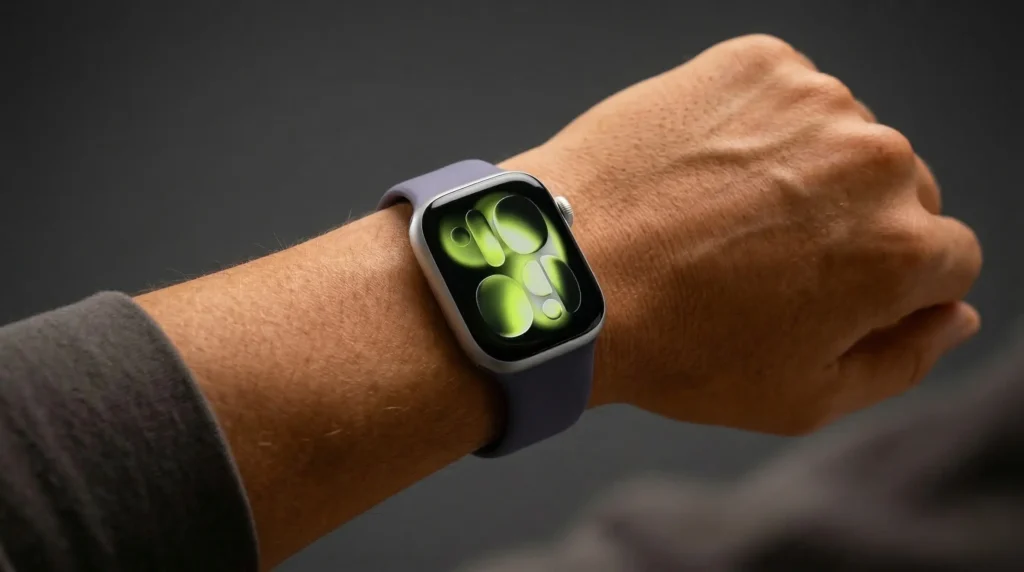
Apple Watch Series 11 is widely expected to introduce blood pressure monitoring as a major health feature. While the capability has generated significant anticipation, its rollout in European markets will not be straightforward. Before the feature can reach EU users, Apple must navigate strict accuracy standards and medical device compliance frameworks that will directly shape how the technology is implemented.
Blood Pressure Monitoring on Smartwatches
Smartwatches cannot replicate the traditional cuff-based method of measuring blood pressure. Instead, they use a cuffless approach, combining optical heart rate sensors with ECG electrodes or accelerometers to analyze signals such as pulse wave velocity.
Algorithms then estimate blood pressure trends based on this data, often requiring periodic recalibration against a standard cuff. The result is an estimation model, not a direct clinical measurement, and that distinction matters greatly under EU law.
Blood Pressure Monitoring on Smartwatches
Smartwatches cannot replicate the traditional cuff-based method of measuring blood pressure. Instead, they use a cuffless approach, combining optical heart rate sensors with ECG electrodes or accelerometers to analyze signals such as pulse wave velocity.
Algorithms then estimate blood pressure trends based on this data, often requiring periodic recalibration against a standard cuff. The result is an estimation model, not a direct clinical measurement, and that distinction matters greatly under EU law.
Why Accuracy Is Critical
Blood pressure is one of the most clinically significant vital signs. Hypertension is a leading risk factor for stroke, heart attack, and kidney disease.
A false low reading could cause someone with genuine hypertension to delay medical care. A false high reading could trigger unnecessary interventions or anxiety. As wearables increasingly move beyond fitness tracking into health management, the stakes for measurement reliability have risen, and regulators have responded accordingly.
EU Accuracy Rules for Health Devices
The EU governs health-monitoring devices under the Medical Device Regulation (MDR), which came into full effect in May 2021. Any device intended to diagnose or monitor a medical condition must undergo conformity assessment and carry a CE marking before it can be sold in Europe.
Classification depends on how the feature is marketed. A smartwatch sold as a wellness tool sits in a different regulatory category than one positioned as a blood pressure monitor. If Apple explicitly frames the Series 11 feature as a health monitoring tool, it may trigger MDR requirements demanding rigorous clinical validation.
The relevant accuracy benchmark is ISO 81060-2, the international standard for automated blood pressure devices. It requires testing across a defined patient population, with mean differences between the device and a reference measurement kept within strict limits — a difficult threshold for cuffless wearables to meet.
How These Rules Could Affect Apple Watch Series 11
Apple has navigated similar regulatory complexity before. The ECG feature on Apple Watch was FDA-cleared in the US before receiving approval in EU countries, with some markets getting access later than others. A comparable rollout pattern is plausible for blood pressure monitoring.
Apple may initially limit the EU version of the feature to trend detection rather than absolute readings, avoiding the full MDR medical device pathway. Alternatively, pursuing CE certification would require clinical evidence and third-party review by a notified body — a lengthier process. Calibration workflows will also face scrutiny, as regulators may question whether user-led recalibration is reliable enough to maintain accuracy over time.
What Users Should Expect
EU users should treat blood pressure monitoring on the Apple Watch Series 11 as a trend indicator, not a clinical tool. Samsung’s Galaxy Watch followed a similar trajectory, launching the feature in a single market before gradual expansion. Smartwatch blood pressure features are best used to flag patterns worth discussing with a doctor, not to replace a medical device.
Conclusion
EU accuracy rules will play a direct role in shaping how blood pressure monitoring appears on the Apple Watch Series 11 in Europe. Between the MDR’s clinical validation requirements and the ISO 81060-2 accuracy standard, Apple faces a high regulatory bar. The feature’s EU availability, scope, and messaging will likely reflect those constraints, and users should set their expectations accordingly.