IMDAD

LOFIC Technology in Xiaomi 17 Ultra: How It Improves 1-Inch Sensor Dynamic Range
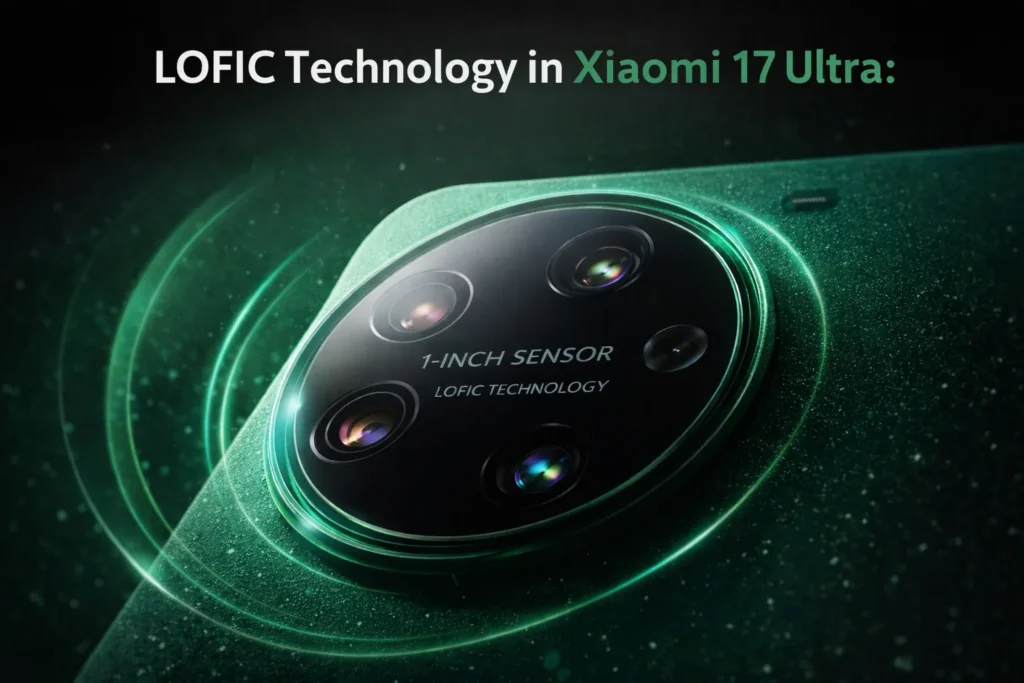
Technical close-up of the Xiaomi 17 Ultra camera lenses with overlays for "1-Inch Sensor" and "LOFIC Technology," featuring futuristic green light accents.

The Xiaomi 17 Ultra is officially launching in China on December 25, 2025, and it’s already generating massive buzz as the new “Night Photography Champion.” While most of the headlines are focused on the massive 200MP periscope zoom, the real technical breakthrough lies in the main camera’s LOFIC technology. Paired with a massive 1-inch OmniVision OV50X sensor, LOFIC is set to redefine how smartphones handle lighting. But what exactly is it, and why does it matter for your photos? Let’s dive into the tech that’s pushing mobile dynamic range to cinema-grade levels. What is LOFIC Technology? LOFIC stands for Lateral Overflow Integration Capacitor. In simple terms, it is a hardware-level solution designed to prevent blown-out highlights (overexposure) in high-contrast scenes. Traditional smartphone sensors have a limited “bucket” (Full Well Capacity) for each pixel. When you take a photo of a bright light source, such as a sunset or a neon sign, that bucket overflows quickly, causing detail in the bright areas to turn into pure white patches. How LOFIC works: The Safety Valve: Each pixel is equipped with a high-density capacitor that acts as an overflow tank. Capturing the “Extra” Light: When the primary pixel hits its limit, the excess light (electrical charge) flows into the LOFIC capacitor instead of being discarded. Single-Exposure HDR: Because the data is stored in the capacitor during the shot, the phone can reconstruct a high-dynamic-range image from a single exposure. How LOFIC Transforms the 1-Inch Sensor The Xiaomi 17 Ultra uses the Light Hunter 1050L (OmniVision OV50X), a 50MP sensor with a massive 1-inch surface area. By adding LOFIC to this already large sensor, Xiaomi achieves three major benefits: “Watch: A deep dive into the Xiaomi 17 Ultra’s revolutionary LOFIC sensor and 200MP zoom capabilities.” https://www.youtube.com/watch?v=VNiDccj7714 “LOFIC (often technically referred to as Lateral Overflow Integration Capacitor) is the key to this low-noise performance.” 1. 100dB+ Dynamic Range (16EV) The combination allows the sensor to reach over 100dB of dynamic range. To put that in perspective, professional cinema cameras often operate in the 14-16 stop (EV) range. This means you can photograph a person in deep shadow against a bright sunrise, and both the person’s face and the details of the sun will be perfectly preserved. 2. Eliminating Ghosting and Motion Blur Most phones achieve HDR by “stacking” multiple photos taken at different exposure levels. If your subject moves during those shots, you get “ghosting.” Because LOFIC captures all the light data in a single frame, motion artifacts are virtually eliminated. 3. Superior Video Performance LOFIC isn’t just for stills. It enables the Xiaomi 17 Ultra to record 4K/8K HDR video with much cleaner transitions between light and dark areas. It also significantly reduces LED flicker, a common issue when filming near digital screens or streetlights. Xiaomi 17 Ultra vs. The Competition While competitors like the Samsung Galaxy S26 Ultra and iPhone 17 Pro Max rely heavily on AI and software processing to “fix” dynamic range, Xiaomi is using a hardware-first approach. Feature Xiaomi 17 Ultra (LOFIC) Competitor (Standard HDR) Exposure Method Single-exposure hardware capture Multi-exposure software stacking Dynamic Range 100dB – 110dB (16EV+) ~85dB – 95dB Motion Handling Perfect (Zero ghosting) Prone to blur/ghosting in HDR Low Light Detail Extremely high (Shadow retention) Moderate (Noise in dark areas) The Verdict: A New Era for Mobile Imaging The integration of LOFIC technology into a 1-inch sensor is a milestone. It signals a shift from “computational photography” (fixing photos with AI) back to “optical excellence” (capturing the data correctly at the source). For professional creators and photography enthusiasts, the Xiaomi 17 Ultra isn’t just another smartphone; it’s a pocketable cinema camera.

LOFIC Technology in Xiaomi 17 Ultra: How It Improves 1-Inch Sensor Dynamic Range Read More »
Samsung Galaxy S26 Ultra 3C Certification Revealed: 60W Fast Charging and 200MP ‘AI-Enhanced’ Camera Confirmed for 2026 Launch

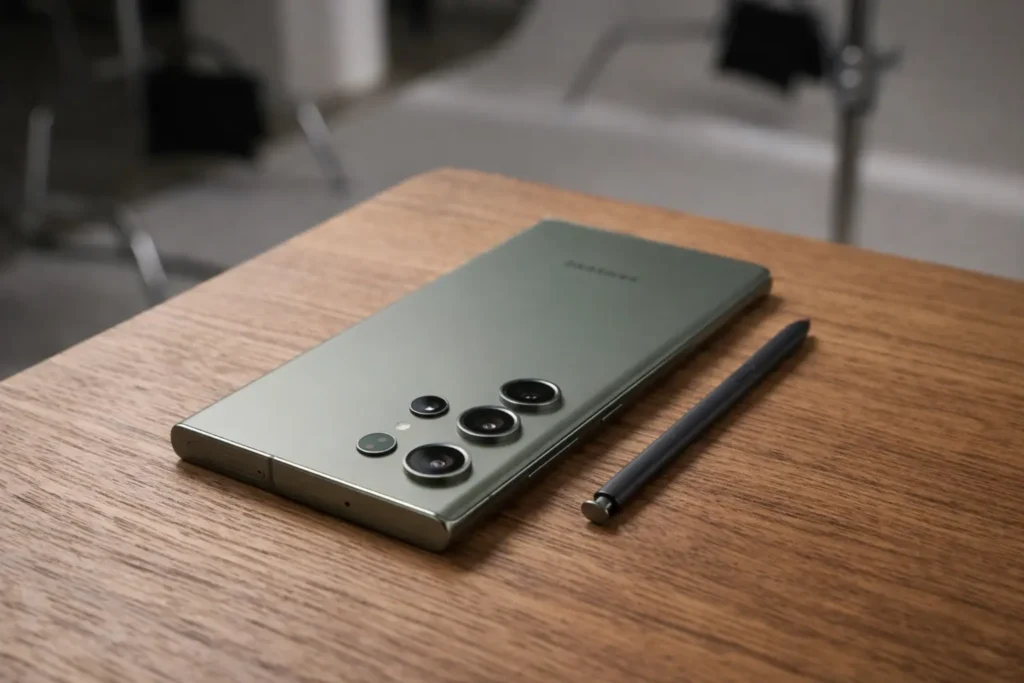
Conceptual render of Samsung Galaxy S26 Ultra showing rumoured 200MP camera and slim bezels

Charging Speed: Expected to hit 0 to 80% in approximately 30 minutes. AI-generated conceptual render of the Galaxy S26 Ultra. Samsung Galaxy S26 Ultra 60W Fast Charging: The 3C Listing Breakthrough For years, Samsung has played it safe with 45W charging. However, the 3C certification for model SM-S9480 (the Chinese variant of the S26 Ultra) reveals a significant jump. The listing confirms the device supports 60W wired fast charging (20V/3A). Charging Speed: Expected to hit 0 to 80% in approximately 30 minutes. The Power Brick: While the phone supports 60W, don’t expect a charger in the box. Samsung recently launched a standalone 60W power adapter, signaling that this upgrade is ready for prime time. Satellite Connectivity: The certification also confirms built-in satellite support, a feature becoming standard for 2026 flagships. Samsung Galaxy S26 Ultra The 200MP ‘AI-Enhanced’ Camera While the 200MP resolution remains, the S26 Ultra is pivoting from “more pixels” to “smarter pixels.” Leaks suggest Samsung is moving toward a “Computational First” camera system. What’s New in the Optics? F/1.4 Aperture Rumors: Industry insiders point to a wider aperture on the main sensor, allowing for nearly 47% more light than the S25 Ultra. AI-Enhanced Processing: With the power of the upcoming Snapdragon 8 Elite Gen 5, the S26 Ultra will reportedly use “Deep-Scene Recognition” to sharpen zoom shots beyond 30x magnification, targeting the “Pro Res Zoom” capabilities seen in the Pixel series. The Sensor: Expect the ISOCELL HP series to be refined further for better low-light video and HDR performance. Performance: Snapdragon 8 Elite Gen 5 The S26 Ultra will be a beast. It is expected to be powered worldwide by the Snapdragon 8 Elite Gen 5 (or the Exynos 2600 in specific regions). This 3nm (or potentially 2nm) chipset is built specifically to handle “One UI 8.5” AI features, which are rumored to be exclusive to the Ultra model at launch. From real-time video translation to advanced on-device privacy screens, the S26 Ultra is being positioned as an “AI PC in your pocket.” New Launch Timeline: Why February 2026? While previous years saw a January “Unpacked” event, 2026 is looking different. Reliable sources like Ice Universe and South Korean news outlets now suggest a February 25, 2026 launch. Event Expected Date Galaxy Unpacked February 25, 2026 Pre-orders Start February 26, 2026 Global Sale Date Early March 2026 Final Thoughts: Is It Worth the Wait? With 60W charging, a refined 7.9mm slim design, and a camera system backed by next-gen AI, the S26 Ultra is shaping up to be the most significant “Ultra” upgrade since the S22. If you are a power user who values battery replenishment and mobile photography, the March 2026 release window is one to mark on your calendar. Editor’s Note: As we approach the February Unpacked event, expect more certifications from the FCC and BIS (India) to surface. Stay tuned for our live coverage. Event Expected Date Galaxy Unpacked February 25, 2026 Pre-orders Start February 26, 2026 Global Sale Date Early March 2026

Samsung Galaxy S26 Ultra 3C Certification Revealed: 60W Fast Charging and 200MP ‘AI-Enhanced’ Camera Confirmed for 2026 Launch Read More »

Oppo Reno 15 5G India Launch Date and Expected Price in December 2025

Oppo Reno 15 5G Glacier White with ribbon-style holographic design and triple camera setup

The wait is finally ending for smartphone enthusiasts in India. Following its successful debut in China, Oppo is officially teasing the Reno 15 5G series for the Indian market. With a massive jump in battery tech and a flagship-grade processor, the Reno 15 is set to dominate the year-end sales. Official Teaser: Amazon and Flipkart Microsites Live Oppo India has officially confirmed the arrival of the Reno 15 series with the tagline “Coming Soon.” Dedicated microsites have already gone live on Amazon India and Flipkart, confirming that the devices will be available across both major e-commerce platforms. The teasers showcase a stunning new Aurora Blue and Glacier White finish, featuring a redesigned camera module that looks more premium than ever. Oppo Reno 15 5G India Launch Date While Oppo has not yet stamped a specific day on the calendar, industry insiders and supply chain leaks suggest the following timeline: Expected Launch Date: Last week of December 2025 (Between Dec 26th and Dec 30th). First Sale: Likely to commence in the first week of January 2026. This timing allows Oppo to capture the New Year shopping spirit, positioning the Reno 15 5G as the “first flagship-killer of 2026.” Read Also: OnePlus 15R Launched at ₹47,999: Get it for ₹44,999 with Launch Offers Expected Price in India Oppo is targeting the mid-premium segment with four potential models: the Reno 15, Reno 15 Pro, Reno 15c, and the new Reno 15 Pro Mini. Model Expected Price (INR) Oppo Reno 15 5G (Standard) ₹39,990 – ₹42,999 Oppo Reno 15 Pro 5G ₹52,990 – ₹54,999 Oppo Reno 15 Pro Mini ₹37,990 – ₹39,999 Note: Prices may vary based on bank offers and introductory launch discounts. Top Features: Why the Reno 15 5G is a Game Changer 1. The 200MP AI Portrait Camera The headline feature is the 200MP main sensor, a massive jump from the previous generation. This is paired with a 50MP periscope telephoto lens capable of 3.5x optical zoom and up to 120x digital zoom. For selfie lovers, the 50MP front camera supports 4K video recording, making it a perfect tool for content creators. 2. Performance: MediaTek Dimensity 8450 Under the hood, the Reno 15 5G is powered by the MediaTek Dimensity 8450 chipset. This 4nm processor is optimized for high-end gaming and AI tasks, ensuring smooth performance on Android 16 (ColorOS 16). With up to 12GB of LPDDR5X RAM, multitasking will be a breeze. 3. Compact Display & Massive Battery One of the most talked-about changes is the 6.32-inch 1.5K AMOLED display on the standard and “Mini” models. It’s a win for users who prefer compact, one-handed use without sacrificing screen quality. Despite its slim profile, it packs a 6,200mAh battery with 80W SuperVOOC fast charging. 4. Durability The series is tipped to feature an IP69 rating, meaning the phone is not just water-resistant but can withstand high-pressure water jets and heavy dust—a rarity in this price bracket. Read Also: Galaxy S26 Ultra Renders Reveal a Major Design Shift: Rounder Corners and a New Camera Island Style Should You Wait for the Oppo Reno 15 5G? If you value camera photography and a compact premium design, the Reno 15 5G is definitely worth the wait. The combination of a 200MP sensor and the Dimensity 8450 makes it a future-proof device for at least the next 3-4 years. Oppo Reno 15 5G vs. Reno 15 Pro 5G: Key Specifications Feature Oppo Reno 15 5G Oppo Reno 15 Pro 5G Display 6.32-inch 1.5K AMOLED (Compact) 6.78-inch 1.5K LTPO AMOLED Refresh Rate 120Hz Adaptive 1–120Hz Processor MediaTek Dimensity 8450 (4nm) MediaTek Dimensity 8450 (4nm) Rear Camera 200MP (OIS) + 50MP Ultra-Wide + 50MP Telephoto 200MP (OIS) + 50MP Ultra-Wide + 50MP Periscope Front Camera 50MP Selfie (4K Video) 50MP Selfie (4K Video) RAM & Storage 12GB LPDDR5X 256GB UFS 3.1 12GB / 16GB LPDDR5X 256GB / 512GB Battery 6,200mAh 6,500mAh Charging 80W SuperVOOC (Wired) 80W Wired + 50W Wireless Build Rating IP69 Water & Dust Resistant IP69 Water & Dust Resistant Software Android 16 (ColorOS 16) Android 16 (ColorOS 16) Expected Price ₹39,990 (Starting) ₹52,990 (Starting) Which one should you choose? Choose the Reno 15 5G if: You prefer a compact, one-handed phone that doesn’t compromise on camera quality. It is arguably the most powerful “small” phone in the mid-range segment right now. Choose the Reno 15 Pro 5G if: You want the ultimate big-screen experience for gaming and movies, a larger battery, and the convenience of wireless charging.

Oppo Reno 15 5G India Launch Date and Expected Price in December 2025 Read More »

OnePlus 15R Gaming Review: Testing Snapdragon 8 Gen 5 and 120FPS Support in India

OnePlus 15R smartphone showing dual rear camera design, highlighting flagship-level performance hardware

The OnePlus 15R has landed in India with a clear mission: to demolish the performance benchmark set by its predecessors. While it’s marketed as an “R-series” mid-premium device, its spec sheet reads like a top-tier flagship. The headline feature is undeniable: it is the world’s first smartphone powered by the Qualcomm Snapdragon 8 Gen 5 (3nm) chipset. For Indian gamers, this raises two massive questions: Does this new chip deliver sustained performance without turning into a heater? And crucially, does it support 120FPS gaming in popular titles like BGMI? We spent 48 hours pushing the OnePlus 15R to its absolute limits. Here is our gaming review. The Hardware Advantage: Why Snapdragon 8 Gen 5 Matters Before we jump into gameplay, it’s crucial to understand the engine under the hood. The move to the 3nm Snapdragon 8 Gen 5 isn’t just a small upgrade over the previous Gen 3 or even the recent Elite chips. OnePlus claims an 11% GPU performance boost and significantly better power efficiency. Paired with up to 16GB of LPDDR5X Ultra RAM and lightning-fast UFS 4.0 storage, game load times are virtually non-existent. But raw power is nothing without control. OnePlus has equipped the 15R with an upgraded Cryo-Velocity Cooling System, featuring a massive vapor chamber designed to tame the new beast. Read Also: OnePlus 15R Launched at ₹47,999: Get it for ₹44,999 with Launch Offers Real-World Gaming Test in India We tested the device in a 25°C ambient room temperature, with “Pro Gamer Mode” enabled in the OnePlus Game Engine. 1. BGMI (Battlegrounds Mobile India) This is the big one for the Indian market. Settings: Smooth Graphics + Extreme+ Frame Rate (120FPS option). Performance: The OnePlus 15R handles BGMI at 120FPS like a dream. In a 45-minute Erangel match, including hot drops at Pochinki and intense final circle firefights, the frame rate counter remained glued to 118-120 FPS. Verdict: It’s flawless. The fluidity of 120Hz provides a genuine competitive advantage in close-quarters combat. 2. Call of Duty: Mobile (CODM) Settings: Low Graphics + Ultra Frame Rate (120FPS). Performance: Similar to BGMI, CODM runs perfectly at its maximum settings. The device easily sustains 120FPS in multiplayer matches. Even in the more demanding Battle Royale mode, dips were rare and imperceptible. 3. Genshin Impact (The Stress Test) Settings: Highest Graphics + 60 FPS mode. Performance: This is where most phones throttle. The Snapdragon 8 Gen 5 muscles through Genshin Impact impressively. For the first 30 minutes, it maintained a near-perfect 59.4 FPS average while exploring Fontaine and engaging in combat. Throttling: After about 40 minutes of continuous play, we noticed very minor micro-stutters as the device managed heat, dropping briefly to roughly 50-55 FPS before recovering. It is significantly more stable than last year’s flagship devices. Display & Touch: The 165Hz Edge A powerful GPU needs a fast display. The OnePlus 15R features a stunning 6.83-inch 1.5K AMOLED panel with a whopping 165Hz refresh rate. While most mobile games cap at 120Hz, the extra headroom makes the UI incredibly smooth. However, the real game-changer for competitive players is the 3200Hz instant touch sampling rate (enabled via a dedicated display chip). In games like BGMI, the delay between tapping the “fire” button and the action happening on screen is perceptibly lower than standard 240Hz panels. Read Also: OnePlus Pad Go 2 Review: Smooth Performance, Big Display, and What You Actually Get Thermals and That Massive Battery Did it overheat? Surprisingly, no. After one hour of intense Genshin Impact, the back of the phone reached a maximum temperature of 43°C near the camera module. It gets warm, but never uncomfortable to hold without a case. The new 3nm chip and cooling system are doing their job well. The 7,400mAh Battery Advantage: This is the biggest surprise for gamers. Gaming eats battery life, but the massive 7,400mAh Silicon-Carbon battery changes the equation. 1 Hour of BGMI (120FPS): consumed only 11% battery. 1 Hour of Genshin (Max): consumed only 16% battery. You can genuinely game heavily for 5-6 hours and still have enough juice for the rest of the day.   Final Verdict: The New Gaming King Under ₹50k? At an effective starting price of ₹44,999, the OnePlus 15R is currently unrivaled in price-to-performance ratio in India. It delivers true flagship gaming performance, flawless 120FPS support in major titles, and a battery that outlasts every competitor. If your primary priority is mobile gaming, you don’t need to look at more expensive flagships. The OnePlus 15R is the weapon you need.

OnePlus 15R Gaming Review: Testing Snapdragon 8 Gen 5 and 120FPS Support in India Read More »

OnePlus 15R Launched at ₹47,999: Get it for ₹44,999 with Launch Offers

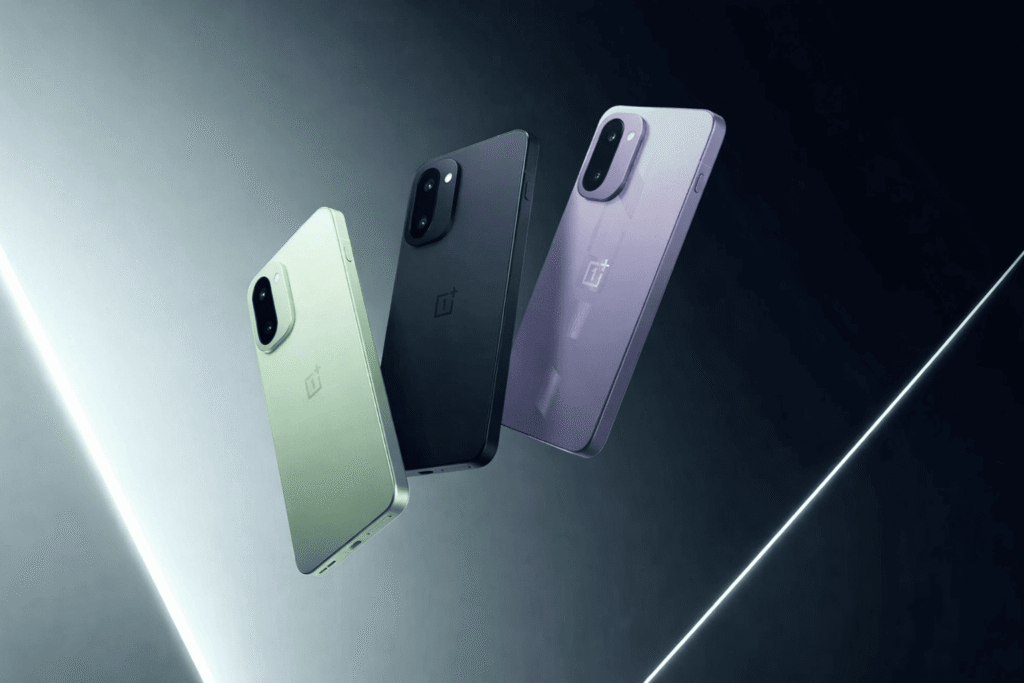
Three OnePlus 15R smartphones shown in Mint Breeze, Charcoal Black, and the India-exclusive Electric Violet colors, featuring a new camera module design and flat edges.

Image Source: OnePlus (Official) The OnePlus 15R was officially launched in India on December 17, 2025, and it is already making waves as a serious contender for the “Flagship Killer” title. Positioned as a performance powerhouse, this device brings several “World’s First” features to the mid-premium segment. Here is everything you need to know about the pricing, bank offers, and ground-breaking specifications of the new OnePlus 15R. OnePlus 15R Price in India & Launch Offers OnePlus has launched the 15R in two storage configurations. While the base price starts at ₹47,999, savvy buyers can grab it for an effective price of ₹44,999 right from day one. Variant MRP Price Effective Price (with Offers) 12GB + 256GB ₹47,999 ₹44,999 12GB + 512GB ₹52,999 ₹47,999 OnePlus 15R Price in India & Launch Offers Bank Discount: Instant ₹3,000 discount with Axis Bank and HDFC Bank Credit Cards & EMI. Pre-booking Bonus: Get a free pair of OnePlus Nord Buds 3 (worth ₹2,299) if you pre-book now. Special 512GB Offer: Pre-book the 512GB variant before December 21 to get an additional ₹2,000 EMI discount, bringing the price down to a stunning ₹47,999. Sale Date: The open sale starts on December 22, 2025, at 12 PM on Amazon India, OnePlus.in, and select offline stores. Read Also: OnePlus 15R Gaming Review: Testing Snapdragon 8 Gen 5 and 120FPS Support in India The Performance Beast: Snapdragon 8 Gen 5 The OnePlus 15R is the world’s first smartphone to debut with the Qualcomm Snapdragon 8 Gen 5 chipset. Co-engineered with Qualcomm, this 3nm chip delivers: 36% faster CPU and 11% faster GPU compared to the previous generation. AI Plus Mind: Deep integration with Google Gemini, allowing you to summarize, search, and retrieve on-device data instantly using the new physical Plus Key. Display & Gaming: 165Hz Smoothness For the first time in this segment, OnePlus has introduced a 165Hz Refresh Rate on a 6.83-inch 1.5K AMOLED display. 120FPS Gaming: Specifically optimized for games like MLBB and BGMI. Touch Response: A dedicated chip provides a 3200Hz touch sampling rate, ensuring near-zero delay during competitive matches. Battery That Never Ends: 7,400mAh OnePlus has gone “all-in” on endurance. The 15R features a massive 7,400mAh Silicon-Carbon battery the largest ever in any OnePlus phone, even surpassing the flagship OnePlus 15. 80W SuperVOOC: Despite the massive size, you can get a full charge in roughly 60 minutes. 4-Year Health: OnePlus guarantees the battery will maintain 80% health even after 4 years of heavy usage. Camera and Design The phone comes in a stunning new Electric Violet color (exclusive to the Indian market) featuring a fiberglass back. Main Camera: 50MP Sony IMX906 with OIS and “DetailMax Engine.” Video: Segment-first support for 4K video recording at 120fps. Selfie: 32MP front camera with Autofocus- a first for the R-series. Durability: It carries the most complete protection package with IP66, IP68, and IP69K ratings, making it resistant to high-pressure hot water jets. Read Also: OnePlus 15R vs 13R: What’s New, What’s Better, What’s Changed Final Verdict: Should You Buy It? If you are looking for a phone that prioritizes raw gaming performance, two-day battery life, and long-term software support (4 years of Android updates), the OnePlus 15R at an effective price of ₹44,999 is currently unbeatable.

OnePlus 15R Launched at ₹47,999: Get it for ₹44,999 with Launch Offers Read More »

Galaxy S26 Ultra Renders Reveal a Major Design Shift: Rounder Corners and a New Camera Island Style

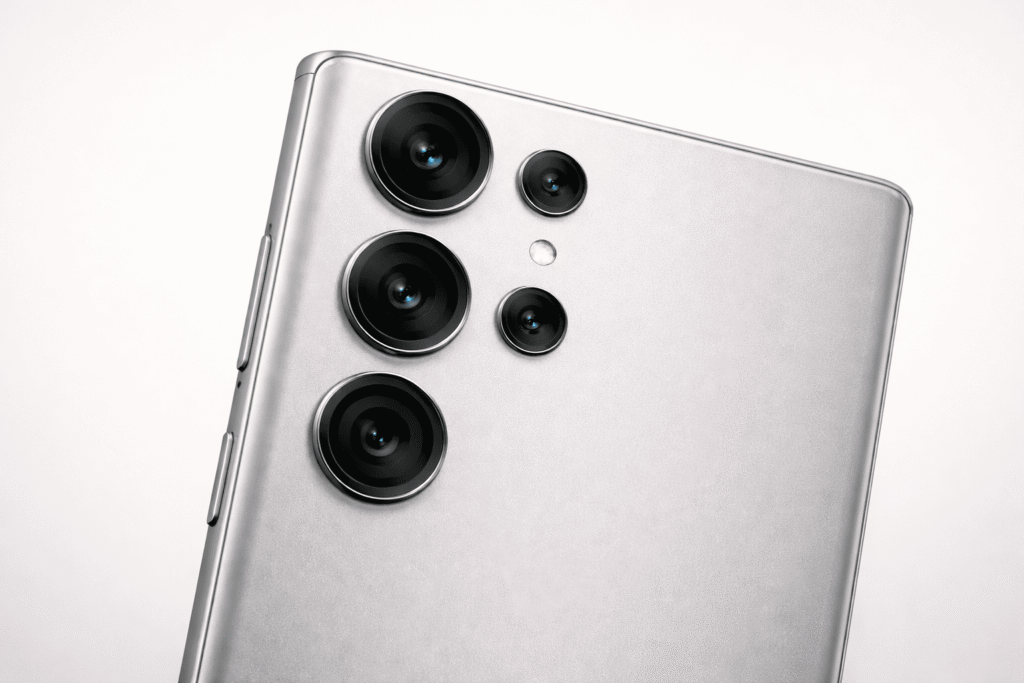
Leaked render of the Samsung Galaxy S26 Ultra rear camera module in Titanium Silver. Close-up view of the minimalist floating lens design and premium metal chassis.

The era of the boxy Ultra is coming to an end. For the first time in four generations, Samsung is rumored to be redesigning the Galaxy S26 Ultra with rounded edges and a unified camera housing. Moving away from its “floating lens” heritage, this 2026 flagship aims to balance the iconic Ultra power with a bolder, more ergonomic look. Goodbye, Sharp Corners: The S26 Ultra’s Most Requested Design Change is Finally Here The most immediately noticeable change in the leaked S26 Ultra renders is the chassis shape. Since the S22 Ultra, the series has maintained sharp, 90-degree corners. While visually striking, these “stabby” corners have been a persistent pain point for users who find they dig into the palms during long sessions. According to reliable leakers like Ice Universe, Samsung has opted for noticeably rounded corners this time around. This “squircle” approach maintains the massive screen real estate users love while making the phone substantially more comfortable to hold for one-handed operation. The Return of the ‘Camera Island While the corners address comfort, the changes to the rear camera are about engineering necessity. The new renders indicate a departure from individual lens cutouts, showing a unified “Camera Island.” This shift is reportedly required to house a massive new 200MP main sensor with a wider f/1.4 aperture. A unified housing allows engineers to stack thicker optics without making the entire phone feel bulky. In fact, rumors suggest the S26 Ultra could be as thin as 7.9mm, its slimmest profile yet. The Battle of 2026: Competitor Comparison As Samsung moves toward a more ergonomic and powerful flagship, the competition in the 2026 market is fiercer than ever. The Galaxy S26 Ultra will face off against the recently launched iPhone 17 Pro Max and the upcoming Pixel 10 Pro XL. Feature Galaxy S26 Ultra (Rumored) iPhone 17 Pro Max Pixel 10 Pro XL Processor Snapdragon 8 Elite Gen 5 (3nm) Apple A19 Pro (3nm) Google Tensor G5 (TSMC 3nm) Main Camera 200MP (f/1.4 Aperture) 48MP Fusion 50MP AI-Optimized Design Rounded Corners / Titanium Two-Tone Aluminum / Glass Polished Metal / Glass Charging 60W Wired / 25W Wireless 29W Wired / 25W MagSafe 37W Wired / 23W Wireless Thickness 7.9 mm 8.25 mm 8.5 mm To see these design changes in action, watch the comprehensive visual breakdown below, which compares the leaked Galaxy S26 Ultra renders directly against its primary 2026 rivals: https://www.youtube.com/watch?v=FpAPJkFwdqU While the iPhone 17 Pro Max has shifted toward a new “Camera Plateau” design and an aluminium-heavy build for better heat management, Samsung is doubling down on raw hardware dominance. The S26 Ultra’s 60W fast charging finally puts it ahead of Apple’s current standards, and its Snapdragon 8 Elite Gen 5 is expected to set new benchmarks in mobile gaming and multitasking. Meanwhile, the Pixel 10 Pro XL remains the “smart” alternative, focusing on the Tensor G5’s specialized AI processing rather than pure hardware specs. However, for users who want the “everything” phone with the S Pen, the best zoom, and the fastest chip, the S26 Ultra looks to be the clear frontrunner. Final Outlook Samsung is no longer just chasing specs; it is refining the user experience. By merging high-end photography hardware into a more comfortable, rounded frame, the Galaxy S26 Ultra is shaping up to be a holistic evolution of the Android flagship. Samsung is expected to officially unveil the Galaxy S26 series at an Unpacked event in February 2026.

Galaxy S26 Ultra Renders Reveal a Major Design Shift: Rounder Corners and a New Camera Island Style Read More »

Xiaomi Pad 8 Successor Explained: What Usually Changes in Xiaomi Tablets

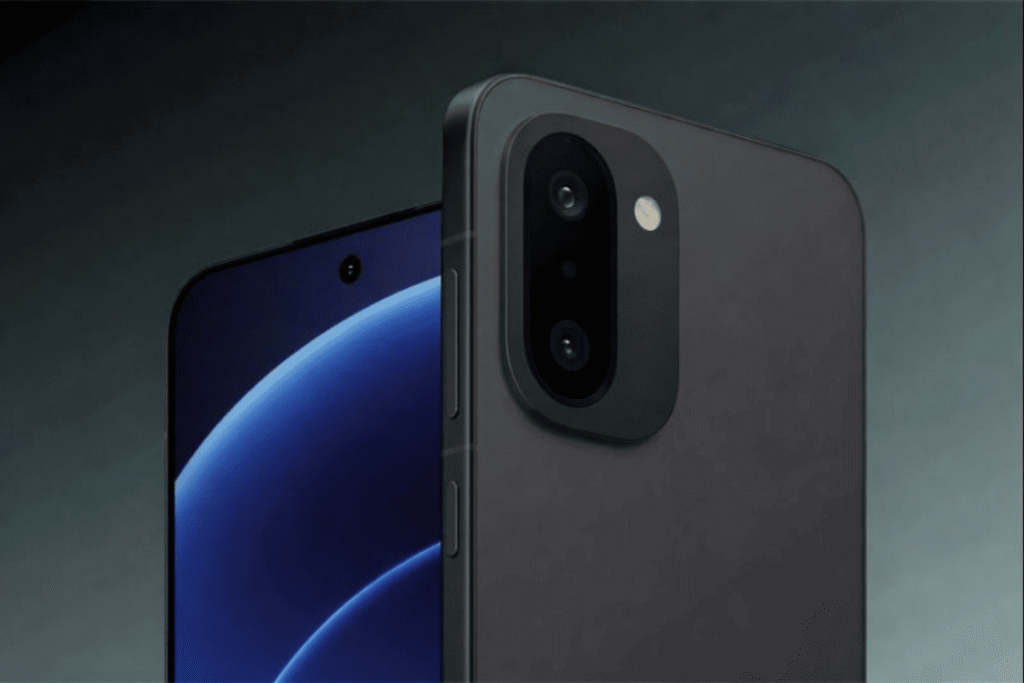
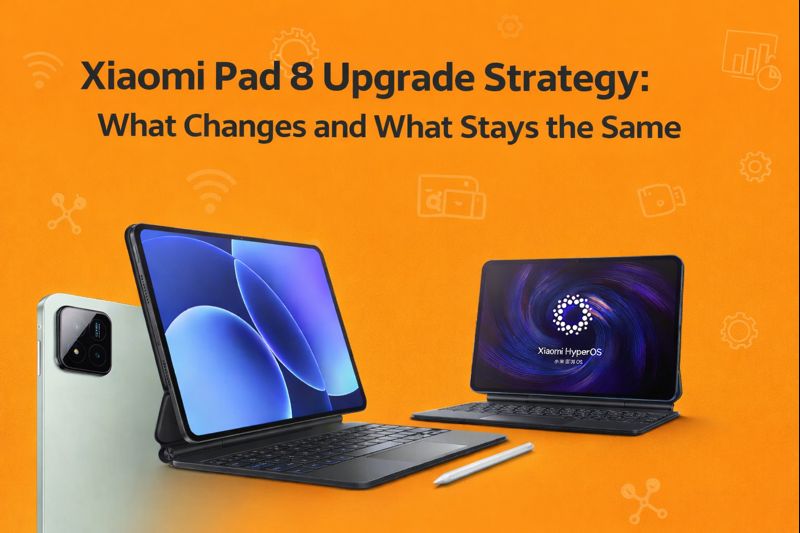
Xiaomi Pad 8 tablets with keyboard and stylus accessories shown on an orange background, highlighting Xiaomi’s tablet upgrade strategy and HyperOS software.

With the Xiaomi Pad 8 already launched, the focus shifts from announcements to its place in Xiaomi’s tablet upgrade cycle. Rather than judging it purely on specs, looking at how Xiaomi typically updates its Pad lineup helps explain whether this generation brings meaningful changes or mostly refinements. Historically, Xiaomi prioritises targeted upgrades while keeping the core formula intact, and the Pad 8 follows that same pattern. Xiaomi tablets are usually positioned to offer balanced hardware at competitive pricing, rather than chasing frequent, radical redesigns. The real appeal lies in how Xiaomi fine-tunes the essentials each year, focusing on performance, display quality, and software longevity while keeping the overall experience familiar and reliable. This predictable cycle makes it easier for users to decide whether an upgrade delivers real value or if sticking with an older model still makes sense for everyday use. Read Also: Xiaomi Pad 8 Specifications: Big Display, Flagship-Grade Performance, All-Day Battery What Xiaomi Typically Improves in Each New Pad Generation Display and Visual Experience Display upgrades are one of the most consistent changes across Xiaomi Pad generations. Newer models often bring improvements in resolution, refresh rate, brightness, or panel tuning. These changes are usually evolutionary rather than dramatic, but they enhance everyday tasks like media consumption, reading, and multitasking. Performance and Chipset Xiaomi generally refreshes the processor with each generation, moving to a newer mid-range or upper mid-range chipset. The goal is steady gains in efficiency and sustained performance rather than flagship-level power. This approach supports smoother multitasking, better app stability, and longer-term software support without pushing costs too high. https://www.youtube.com/watch?v=Wg0RCuR0ZsY&t=8s Software and Update Support Each new Pad model typically launches with a newer Android version and Xiaomi’s latest system interface. While the core UI experience remains familiar, background optimisations, multitasking features, and long-term update commitments usually improve with newer hardware. Battery Optimisation Battery capacity often remains similar between generations, but efficiency tends to improve through chipset optimisation and software tuning. Charging speeds may also see incremental upgrades, though Xiaomi generally avoids extreme jumps in this area for its mainstream tablets. Xiaomi Pad 8 Upgrade Strategy: What Changes and What Stays the Same Despite generational updates, many aspects remain consistent, and that is very much by design. Xiaomi often retains a similar design language, materials, and form factors across multiple Pad models to avoid unnecessary changes. Camera hardware also sees minimal upgrades, as tablets are built mainly for productivity and media consumption rather than photography. Audio setups and accessory support typically evolve at a slower pace, focusing on small refinements instead of complete reinvention. The Xiaomi Pad 8 closely follows Xiaomi’s established upgrade strategy, delivering targeted gains in performance, display quality, and software while keeping the overall experience familiar. Instead of redefining the series, it refines it, positioning the Pad 8 as a logical successor that continues Xiaomi’s value-focused, incremental approach. Compared to the Xiaomi Pad 7, the Pad 8 focuses on incremental updates. It offers improvements in performance efficiency, display smoothness, and software support, while the design and core user experience remain largely unchanged. For existing Pad 7 users, the differences are moderate rather than substantial. Source : Xiaomi Who Should Consider Upgrading to the Xiaomi Pad 8 The real gains with the Xiaomi Pad 8 are most obvious if you are upgrading from an older or entry-level tablet. Improvements in responsiveness, display smoothness, and long-term software support are immediately noticeable. For users on a recent Xiaomi Pad, the decision becomes less about necessity and more about whether incremental performance boosts and a longer update window justify the switch.

Xiaomi Pad 8 Successor Explained: What Usually Changes in Xiaomi Tablets Read More »

Xiaomi Pad 8 Specifications: Big Display, Flagship-Grade Performance, All-Day Battery

Xiaomi Pad 8 front display and rear design shown side by side

Some images in this article are AI-generated and used for illustrative purposes. The Xiaomi Pad 8 is now officially available in the market, strengthening Xiaomi’s position in the premium Android tablet segment. With a focus on a large high-refresh display, powerful Snapdragon performance, and a battery designed for full-day usage, the Pad 8 targets users who want a capable tablet for media consumption, multitasking, and productivity without stepping into ultra-premium pricing. Xiaomi Pad 8 Specifications Display and design The Xiaomi Pad 8 features an 11-inch-class LCD display with a 3K-level resolution and a 144 Hz refresh rate, delivering smooth system navigation, fluid animations, and sharp visuals for media consumption, reading, and multitasking. Support for HDR formats enhances contrast and colour reproduction during compatible video playback. From a design standpoint, the Pad 8 adopts Xiaomi’s minimalist tablet aesthetic, with a slim metal chassis and narrow bezels that maximise usable screen area while maintaining a comfortable in-hand feel for extended use. Performance and hardware The Xiaomi Pad 8 is powered by a flagship-class Snapdragon chipset, placing it firmly above entry-level and mid-range tablets in terms of performance. With configurations offering up to 12 GB of RAM and fast UFS storage, it is designed to support intensive multitasking, productivity-focused applications, and casual to moderate gaming workloads. In real-world usage, this hardware delivers quick app launches, consistent performance during longer sessions, and smooth operation that takes full advantage of the high-refresh-rate display. While it is not positioned as a full laptop replacement for demanding creative tasks, the Pad 8 provides ample performance headroom for the vast majority of tablet-centric use cases. Read Also: Xiaomi Pad 8 Successor Explained: What Usually Changes in Xiaomi Tablets Software experience The Xiaomi Pad 8 runs Android 16 with HyperOS, Xiaomi’s tablet-optimised software layer. HyperOS brings improved multitasking features such as split-screen modes, floating windows, and better keyboard and stylus integration. These enhancements make the Pad 8 suitable not just for entertainment, but also for note-taking, document editing, and light productivity workflows. Xiaomi also includes ecosystem features that allow smoother interaction with other Xiaomi devices, adding convenience for users already invested in the brand. https://www.youtube.com/watch?v=Wg0RCuR0ZsY Battery life and charging A key highlight of the Xiaomi Pad 8 is its large 9,000mAh-class battery, designed to comfortably last a full day of mixed usage. Streaming video, browsing, attending online meetings, and working on documents can all be handled without frequent charging. The tablet supports fast wired charging, allowing quicker top-ups when the battery runs low, which is especially useful for users who rely on the device throughout the day. Cameras, audio, and connectivity As expected from a tablet, the camera setup is functional rather than headline-grabbing. The Pad 8 includes a single rear camera for document scanning and casual photos, along with a front-facing camera optimised for video calls and online classes. Audio is handled by a quad-speaker system with Dolby Atmos support, delivering clear and well-separated sound for movies, games, and video conferencing. Connectivity options include Wi-Fi 7, Bluetooth, and USB-C, ensuring fast wireless performance and compatibility with modern accessories. The Xiaomi Pad 8 is aimed at users who want a large, smooth display, dependable performance for everyday multitasking, and reliable battery life at a more accessible price point. It is well suited for students, professionals seeking a secondary device, and those upgrading from older or entry-level Android tablets.

Xiaomi Pad 8 Specifications: Big Display, Flagship-Grade Performance, All-Day Battery Read More »

Oppo Pad Air 5 Set to Launch Soon With 5G Support, Wi-Fi Variant and Two Colours

Oppo Pad Air 5 tablet in Starlight Pink shown from front and rear, featuring a slim design, single rear camera, large display, and stylus accessory.

Photo credit : Oppo The Oppo Pad Air 5 is launching soon, and early details point to a tablet designed for everyday users who want flexibility. With 5G and Wi-Fi-only variants and two colour options confirmed, Oppo appears to be targeting both mobile-first users and home users with a single, streamlined device. Oppo Pad Air 5 Scheduled to Launch on December 25, 2025 Chinese consumer electronics manufacturer Oppo has officially confirmed that the Oppo Pad Air 5 tablet will be unveiled in China on December 25, 2025. The launch event is set to take place at 10:00 AM China Standard Time (approximately 7:30 AM IST) and follows the activation of the device’s pre-order page on Oppo’s official China online store. Pre-order listings have already begun accepting reservations for the tablet ahead of its formal market debut, providing early visibility into the design, key specifications, colour options and the availability of multiple configuration variants. The Oppo Pad Air 5 brings notable upgrades over the Pad Air 2, including a larger and higher-resolution display, a newer Dimensity 7300-Ultra chipset with 5G support, and a bigger battery. It also ships with a newer Android-based ColorOS version, while camera hardware and charging speeds remain largely unchanged. Oppo Pad Air 5 Connectivity Options: 5G and Wi-Fi Models The Oppo Pad Air 5 will be available in two connectivity variants: a Wi-Fi–only model and a Wi-Fi + 5G version. This approach enables Oppo to offer separate configurations for users relying primarily on fixed networks and those needing cellular data support for use outside Wi-Fi coverage areas. The Wi-Fi variant of the Oppo Pad Air 5 supports dual-band Wi-Fi and is intended for use on fixed or public wireless networks. It does not include a SIM slot and relies entirely on Wi-Fi for internet connectivity. The Wi-Fi + 5G variant of the Oppo Pad Air 5 includes cellular connectivity, allowing direct access to 5G mobile networks via a SIM card. It is powered by the MediaTek Dimensity 7300-Ultra chipset, which integrates a 5G modem, enabling standalone internet access without reliance on Wi-Fi or tethering. Both variants are expected to share the same core hardware, including the display, processor, battery, cameras, and software. The primary difference is network support, with the 5G model offering cellular connectivity. RAM and storage options may vary by market and region. At launch, Oppo has confirmed both connectivity options for the Chinese market. Information on regional availability, supported 5G bands, and plans for an international rollout is expected to be announced separately. Feature Pad Air 5 (5G) Pad Air 5 (Wi-Fi) Connectivity 5G + Wi-Fi Wi-Fi only SIM Support Yes No Processor Same chipset (expected) Same chipset Display Same display panel Same display panel Battery Same capacity (expected) Same capacity Colours Two colours Two colours Oppo Pad Air 5 Design and Colour Variants Pre-order listings indicate that the Oppo Pad Air 5 features a slim slate-style design with narrow, uniform bezels and a large display. It is expected to sport a 12.1-inch 2.8K LCD panel on the front, while the rear includes a single camera and a clean, minimalist finish, likely with a matte or soft-light texture. The Oppo Pad Air 5 is confirmed to be available in Space Gray, Starlight Powder, and Starlight Pink colour options. Listings also reference a textured or matte “Soft Light” finish, which may affect the surface texture and overall appearance of the tablet. Pre-order details suggest that colour and configuration availability may differ between the Wi-Fi and Wi-Fi + 5G variants. The 5G model is listed in Space Gray with select memory options, while the Wi-Fi versions appear across a wider range of colours and storage configurations. Expected Specifications and Key Features of Oppo Pad Air 5 The Oppo Pad Air 5 is expected to feature a 12.1-inch LCD display with 2.8K resolution (approximately 2800 × 1980 pixels), a 120 Hz refresh rate, and a 7:5 aspect ratio. It is powered by the MediaTek Dimensity 7300-Ultra chipset and is expected to run Android 16 with ColorOS 16. Memory options may include 8 GB or 12 GB LPDDR4x RAM with 128 GB or 256 GB UFS 3.1 storage. The tablet is listed with 8 MP cameras on both the front and rear, a 10,050 mAh battery with 33 W fast charging, quad speakers with Dolby Atmos, and Wi-Fi and Wi-Fi + 5G variants. It is expected in Space Gray, Starlight Powder, and Starlight Pink colour options.

Oppo Pad Air 5 Set to Launch Soon With 5G Support, Wi-Fi Variant and Two Colours Read More »

Vivo V70 Expected Specifications: Display, Camera, Battery, and Software

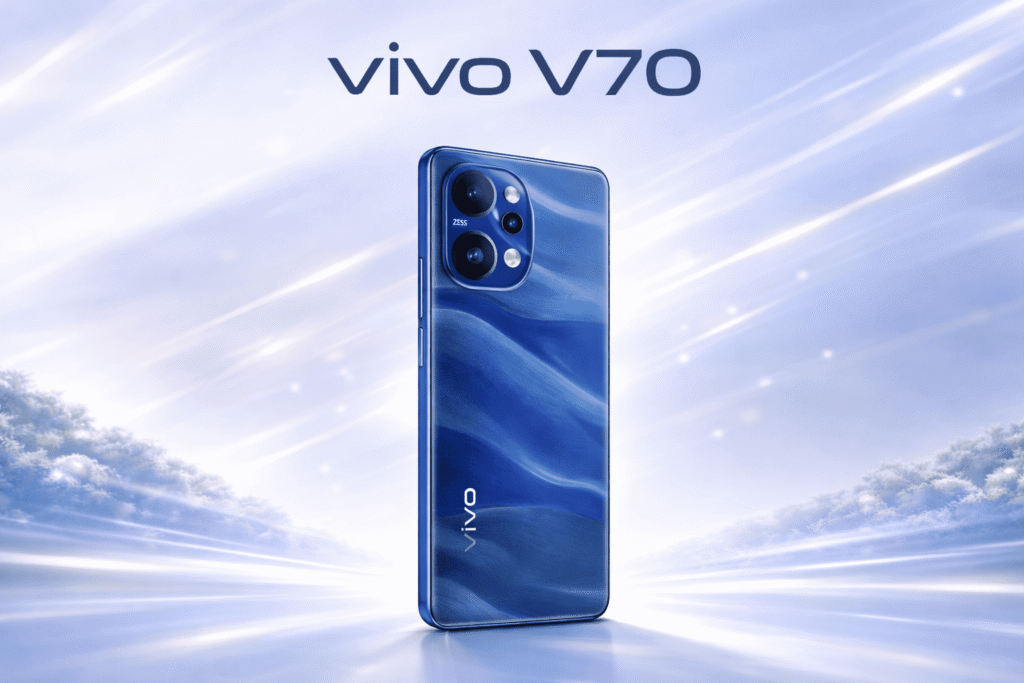
Vivo V70 smartphone in blue colour shown as a hero image, highlighting the rear camera design and premium finish.

 Vivo V70 has already started surfacing through leaks and listings. A new chipset, a high-refresh AMOLED display, and camera upgrades are all on the table. But how big are these changes? Here’s a clear look at the expected specifications. Vivo V70 Performance and Hardware Specifications The Vivo V70 is expected to focus on smooth, efficient performance rather than raw flagship power. Powered by a modern mid-range Snapdragon chipset, it should handle everyday tasks like app switching, social media, streaming, and multitasking with ease. With 8GB or 12GB RAM options and optimized software, the phone is likely to feel responsive in daily use, with stable performance during longer sessions and light to moderate gaming. The Vivo V70 is expected to be powered by the Qualcomm Snapdragon 7 Gen 4 chipset. Positioned in the upper mid-range segment, it focuses on balanced performance and power efficiency. Based on early estimates, the chip could score around 1,200-1,300 in single-core and 3,800-4,100 in multi-core Geekbench tests, enabling smooth daily use, reliable multitasking, and stable sustained performance with improved AI and thermal management over previous generations. The phone is expected to offer 8GB and 12GB RAM options, supporting smooth multitasking and efficient app switching. This memory configuration should be suitable for everyday use, productivity tasks, and light gaming without frequent performance interruptions. The Vivo V70 is expected to feature a 6.8-inch AMOLED display with Full HD+ resolution and a 120Hz refresh rate. The panel is likely to support HDR10+, an in-display fingerprint sensor, and a centered punch-hole cutout for the front camera. Camera Details: 50MP Sensors and 4K Video Support For optics the Vivo V70 is expected to feature a triple rear camera setup, led by a 50MP primary sensor, accompanied by an ultra-wide lens and a third auxiliary sensor. On the front, the phone is likely to include a 50MP selfie camera housed in a centered punch-hole cut out. The setup is likely to support features such as autofocus, HDR, and advanced image processing through software optimisation. For videography it support 4K video recording on both the rear and front cameras. Additional features may include electronic image stabilization (EIS), HDR video, and multiple frame-rate options for smoother video capture during everyday recording. Battery, Charging & Software Experience The Vivo V70 is expected to pack a 5,000mAh battery. Based on similar hardware and software optimisation, it should deliver an estimated 7–8 hours of screen-on time under mixed usage, including browsing, streaming, and social media. The Vivo V70 is expected to support fast wired charging, with reports pointing to around 80W charging. At this speed, the phone could charge from 0 to 100 percent in approximately 45–50 minutes, depending on usage conditions and battery health. The Vivo V70 is expected to run on Android 15, layered with Vivo’s Funtouch OS (India and global markets) or OriginOS (China). The software is likely to include updated privacy controls, system-level optimisations, and standard Android features, with regular security updates and UI refinements. With a 5,000mAh battery and a power-efficient mid-range chipset, the Vivo V70 is expected to deliver full-day endurance on a single charge. Under mixed usage, estimated screen-on time is around 7–8 hours, supported by software-level power optimisation. The first thing users will notice is how clean and fluid the interface feels. Based on Funtouch OS or OriginOS over Android 15, the UI focuses on smooth animations, simple navigation, system-wide customization, and improved background app management for a more streamlined everyday experience.

Vivo V70 Expected Specifications: Display, Camera, Battery, and Software Read More »

At Express Coverage 24, we bring you the latest in technology, gadgets, and digital trends all in one place. From in depth reviews and expert insights to breaking tech news, our goal is to keep you informed and ahead in the fast moving world of innovation. Whether you are a tech enthusiast or just curious about the next big thing, we deliver reliable, easy to read articles that matter.

Content Transparency

At Express Coverage 24, we value honesty, accuracy, and trust. Every article, review, and news update published on our platform is created with thorough research and a commitment to providing reliable information. We do not promote products or technologies without careful evaluation, and whenever opinions are shared, they are clearly marked as such. Our mission is to keep our readers informed with unbiased, fact-based content while being transparent about our sources, partnerships, and review processes.