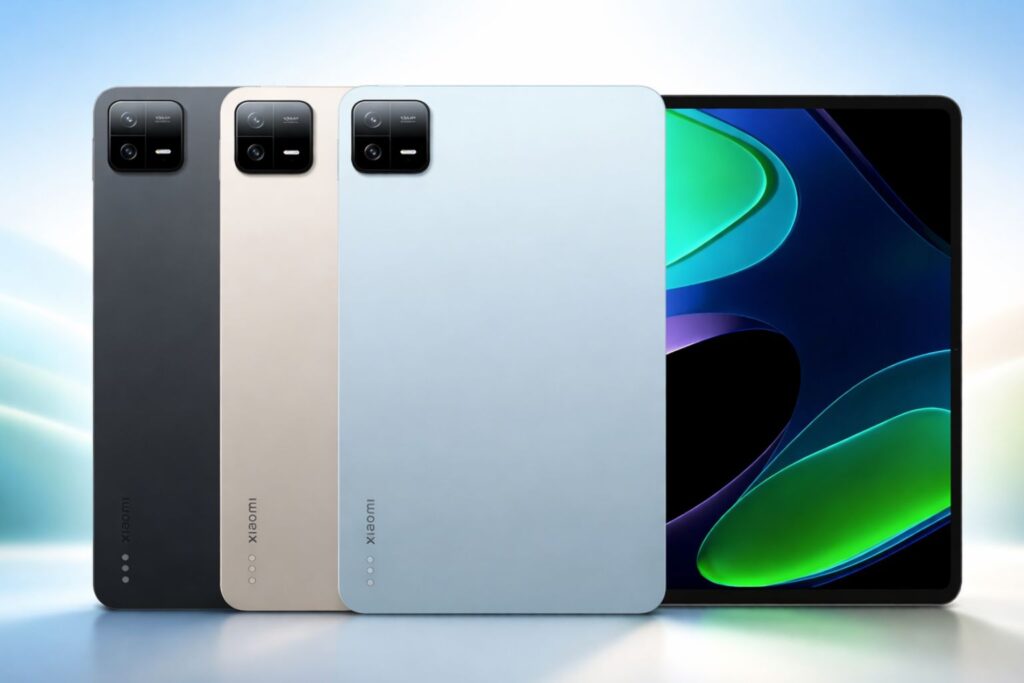
The Xiaomi Pad 6 remains a noteworthy Android tablet in early 2026. Its balance of performance, display quality, and price makes it relevant, but there are trade-offs that buyers should understand before committing.
Xiaomi Pad 6: Core Specifications
The Xiaomi Pad 6 is built around an 11-inch 144Hz LCD with a 2880 × 1800 resolution. This combination delivers smooth motion and sharp visuals for browsing, video, and gaming.
Under the hood, it uses the Qualcomm Snapdragon 870 chipset. Paired with LPDDR5 RAM and UFS 3.1 storage, it still handles most mainstream workloads without lag.
Battery capacity is 8,840 mAh with 33 W USB-C charging support. Charging speed isn’t class-leading, but endurance is solid for all-day use.
Performance in 2026 Context
For everyday productivity such as email, documents, and browsing, the Snapdragon 870 remains capable.
It also runs popular Android games at healthy frame rates, especially when thermal management kicks in.
However, the Snapdragon 870 is aging compared with current tablet-optimized SoCs.
Modern heavy multitasking and sustained gaming may show occasional throttling under load.
MIUI Pad continues to improve with task-focused features like split-screen and floating windows.
Still, Android’s tablet optimization lags behind some competitors when handling complex workflows.
Xiaomi Pad 6: Display, Audio, and Media
The 144Hz panel is a standout for its class, keeping UI interactions and supported media smooth. Colour accuracy and brightness hold up well for indoor use and casual media consumption.
Audio is driven by quad speakers with Dolby Atmos support. Output is clear and punchy, suitable for movies and video calls without external speakers.
Even so, the Pad 6 uses an LCD rather than OLED panel, meaning contrast and deep blacks fall short of pricier alternatives.
Battery and Everyday Use
In typical mixed use, the 8,840 mAh battery lasts through a full day. Web browsing, video streaming, and messaging are well within its radius.
The 33 W charging rate is average by 2026 standards; faster charging is available on competing tablets.
Xiaomi Pad 6 Limitations to Consider
Aging Chipset: Snapdragon 870 is capable but no longer cutting edge.
LCD Instead of OLED: Premium tablets now increasingly use OLED for richer contrast.
Software Optimization: Android still trails some ecosystems in large-screen multitasking.
Charging Speed: 33 W is adequate but not class-leading.
These factors don’t break the experience but are worth noting if future-proofing is a priority.
Who Should Buy Xiaomi Pad 6 in 2026?
- Students and casual users who want smooth UI performance.
- Media consumers and gamers who value high refresh rates.
- Buyers seeking a capable Android tablet under mid-range budget.
Verdict
In 2026, the Xiaomi Pad 6 still offers a solid blend of performance, display smoothness, and value.
It’s worth buying if you prioritize balanced specs and strong everyday performance without needing the absolute latest tablet technology. For users focused on premium display quality or cutting-edge power, newer alternatives may be more compelling.
If you want, I can add a spec comparison table with current competitors in the same price segment.