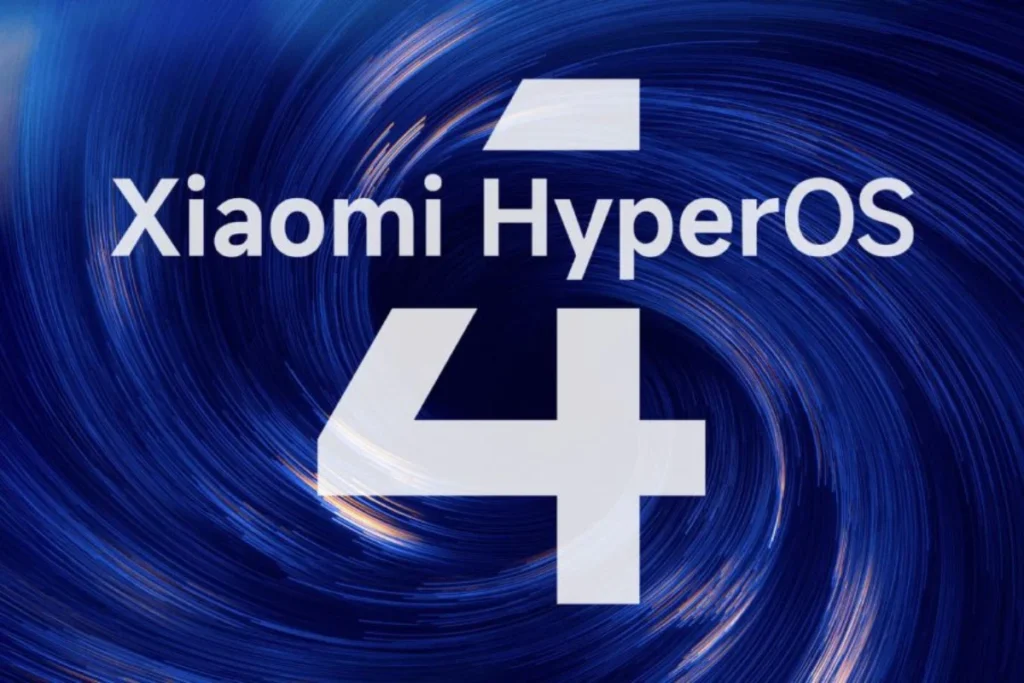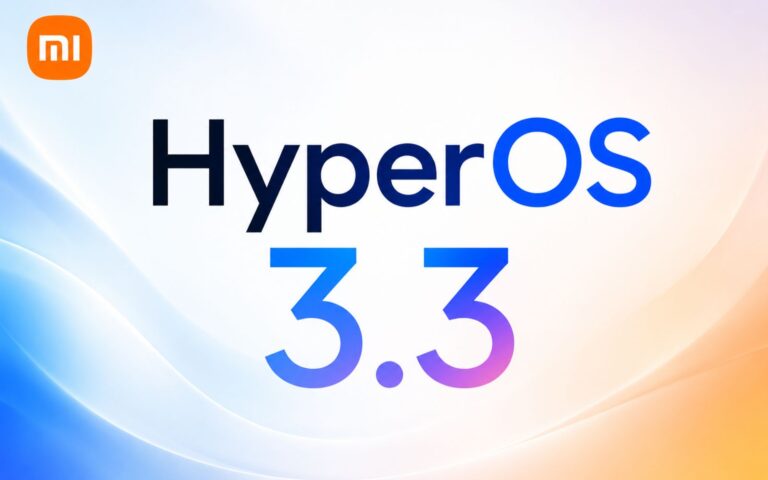
Xiaomi has started rolling out HyperOS 3 worldwide. This is the third version of its in-house operating system. Most devices will get HyperOS 3 based on Android 16, while older models will receive an Android 15 based version. The update focuses on better AI features, a cleaner system design, and improved connectivity between Xiaomi devices.
This update represents Xiaomi’s most significant push toward a unified ecosystem, aiming to bridge the gap between smartphones, tablets, and AIoT devices.
Key Changes and New Features In HyperOS 3
HyperOS 3 introduces several functional and visual upgrades designed to improve the daily user experience.
1. Xiaomi "HyperIsland"
The most visible addition is HyperIsland, an interactive notification hub located around the front camera cutout. Similar to Apple’s Dynamic Island, it provides real-time updates for over 70 services, including music playback, timers, charging status, and delivery tracking.
2. Advanced HyperAI Integration
Xiaomi has embedded its “HyperAI” suite deep into the system. Key productivity tools include:
DeepThink: An AI assistant for the Notes app that generates summaries and provides writing suggestions.
AI Dynamic Wallpapers: Users can transform static photos into cinematic, moving backgrounds.
Smart Screen Recognition: A feature that allows users to circle content on the screen to trigger instant actions like translation or web searches.
3. Performance and Efficiency Gain
According to Xiaomi’s technical white paper, the system architecture has been redesigned to focus on faster performance and better stability. App launch speeds are reported to be up to 21% faster.
Gaming performance has improved by around 15%, supported by more effective thermal management. System efficiency has also been enhanced, with up to 30% better power management during video playback.
4. Cross-Device Connectivity
HyperOS 3 improves “HyperConnect,” making it easier to share files and clipboards between Xiaomi devices. Notably, the update also introduces enhanced compatibility with Apple devices, allowing for easier file transfers and hotspot sharing between iOS and HyperOS.
Eligible Devices For The Update
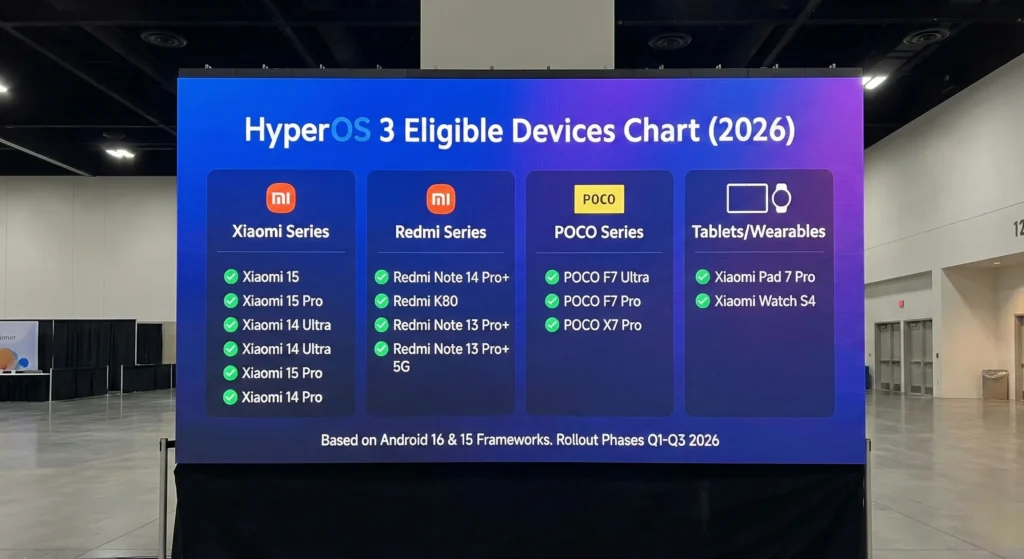
The rollout is being conducted in phases, starting with flagship models and gradually expanding to mid-range and budget segments.
Xiaomi Series
- Xiaomi 15 Ultra
- Xiaomi 15 Pro
- Xiaomi 15
- Xiaomi 14 Ultra
- Xiaomi 14
- Xiaomi 13T Pro
- Xiaomi 13 Ultra
- Xiaomi 12 Pro
- Xiaomi MIX Flip
Redmi Series
- Redmi Note 14 Pro+
- Redmi Note 14 Pro
- Redmi Note 13 Pro+ 5G
- Redmi Note 13 5G
- Redmi K80
- Redmi K70
POCO Series
- POCO F7 Ultra
- POCO F7 Pro
- POCO F6 Pro
- POCO F6
- POCO X7 Pro
- POCO X6 Pro
- POCO M7 Pro 5G
Tablets and Wearables
- Xiaomi Pad 7 Pro
- Xiaomi Pad 6S Pro
- Redmi Pad Pro
- Xiaomi Watch S4
Rollout Schedule For The Update
Phase 1 (Ongoing): Flagship devices including the Xiaomi 15 and 14 series, and the Redmi K80 series.
Phase 2 (Late Q1 2026): Transition to mid-range favorites like the Redmi Note 13 series and the POCO X7 lineup.
Phase 3 (Mid 2026): Older legacy devices and budget-tier handsets.
How to Check for the Update
To check if your device is eligible for the download, follow these steps:
- Navigate to Settings.
- Tap on About Phone.
- Select the HyperOS version banner at the top.
- Click Check for updates.
It is recommended to back up your data and ensure at least 10GB of free storage before initiating the installation, as the HyperOS 3 package is substantial.